Photo: DVIDS, 17 September 2026
Strategic ArchitectureThis comprehensive assessment evaluates the convergence of maritime security drills, domestic political shifts, and continental conflict spillovers shaping North Africa and the Mediterranean basin. It integrates operational naval dynamics, institutional legitimacy gaps, and cross-border transnational trafficking vectors into a unified strategic framework.
1. Maritime Security and Multilateral Naval Diplomacy
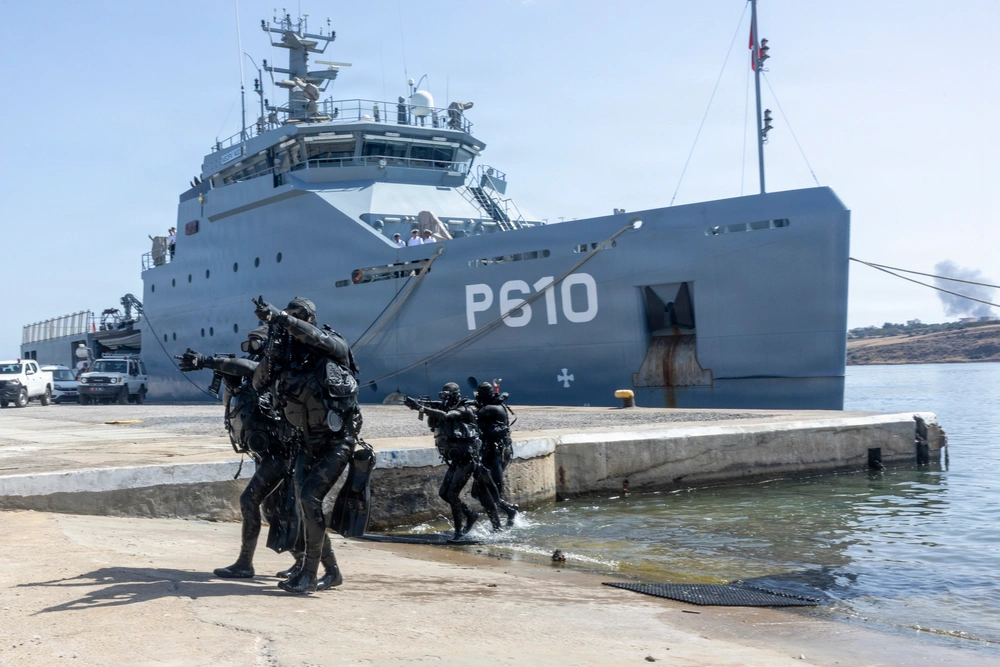
The juxtaposition of three prominent naval exercises—Phoenix Express 2026 hosted by Tunisia, SEABORDER 2026 hosted by Libya, and the Moroccan-French CHEBEC—illustrates a core structural paradox: the Mediterranean is operationally integrated yet politically fragmented.
The Libyan Legitimacy Calculus: Libya hosting SEABORDER 2026 at Tripoli Naval Base under the auspices of the 5+5 Defense Initiative represents a calculated push for international normalization by Tripoli authorities. Despite severe political fragmentation and a lack of unified command, functional cooperation around search and rescue (SAR) demonstrates that maritime safety remains a rare domain where institutional continuity can be projected.
The Maghreb Operational Floor (Algeria-Morocco): Simultaneous participation in multilateral frameworks like Phoenix Express and SEABORDER reveals a baseline of pragmatic security coordination driven by shared vulnerabilities—including maritime accidents, smuggling, and migrant trafficking. However, because these engagements occur strictly within multilateral frameworks without bilateral channels, this cooperation functions merely as an operational floor rather than a diplomatic bridge.
Morocco’s Atlantic-Mediterranean Posture: High-end exercises such as CHEBEC, featuring anti-submarine warfare drills alongside a French nuclear attack submarine, underscore Rabat’s deep integration into Western defense architectures. Positioned at the critical Gibraltar gateway, Morocco’s naval assets are increasingly vital to regional chokepoint security.
Egypt’s Suez Hedging Strategy: Cairo’s participation in Phoenix Express, paired with a diverse training rotation involving partners from Greece and France to India, Türkiye, and Russia, functions as strategic hedging. By maintaining broad military ties, Egypt reinforces its position as a neutral, reliable service provider for vital global shipping lanes.
2. Domestic Political Dynamics and Institutional Legitimacy Gaps
North Africa’s recent political milestones highlight contrasting vulnerabilities in institutional resilience, democratic engagement, and state authority.
Morocco’s Creeping Legitimacy Gap: The September 23 parliamentary elections—won by the Authenticity and Modernity Party (PAM) with 97 seats, followed by the National Rally of Independents (RNI) with 66, and a rebound by the Islamist PJD to 54—were verified as free and transparent by international observers. However, voter turnout dropped sharply to roughly 38%. This signals a widening disconnect between the electorate and political parties, though core foreign and security policies remain insulated under the royal palace.
Libya’s Fragmented Transition: Although Libya advanced toward elections via the UN-brokered “4+4” agreement and unanimous House of Representatives approval, fierce pushback from the High Council of State and the Presidential Council exposes deep institutional paralysis. Public demand for elections collides with a fractured state apparatus incapable of independently securing national territory or coastal perimeters.
3. Continental Spillover and Transnational Trafficking Vectors
Renewed conflict in Ethiopia, involving federal forces, a coalition led by the Tigray People’s Liberation Front across Tigray, Amhara, and Afar, and escalating tensions with Eritrea, poses severe indirect security risks to North Africa.
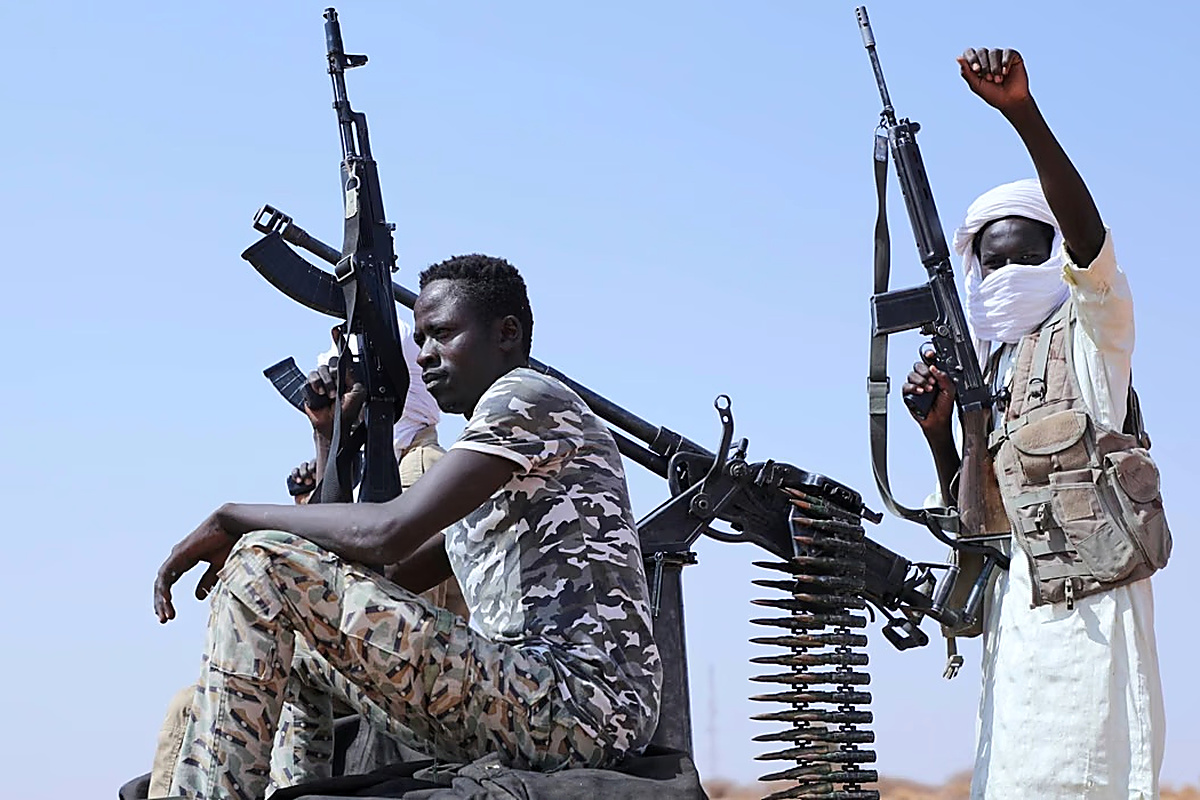
Convergence of East and West Networks: Persistent instability in the Horn of Africa and the Sudanese theater act as force multipliers for transnational crime. Displaced populations and weapons flows are increasingly feeding into logistic pipelines running westward through Chad and the Central Sahel, merging with routes managed by regional cartels.
Consolidation of the War Economy: Amid absent or weak state authority across the Sahelian interior, smuggling syndicates are institutionalizing war economies. Human trafficking, illicit gold extraction, and arms smuggling have become structurally embedded.
Tactical Adaptation: Pressured by enhanced northern border policing, trafficking networks are fragmenting into hazardous, remote desert tracks, making interdiction increasingly difficult for regional security forces.
4. Enforcement Asymmetries and the Intelligence Deficit
Downstream pressures from the Sahel and Sudan converge heavily on North Africa’s land borders, ultimately funneling illicit flows toward Mediterranean departure points. Managing these pressures exposes critical operational limitations:
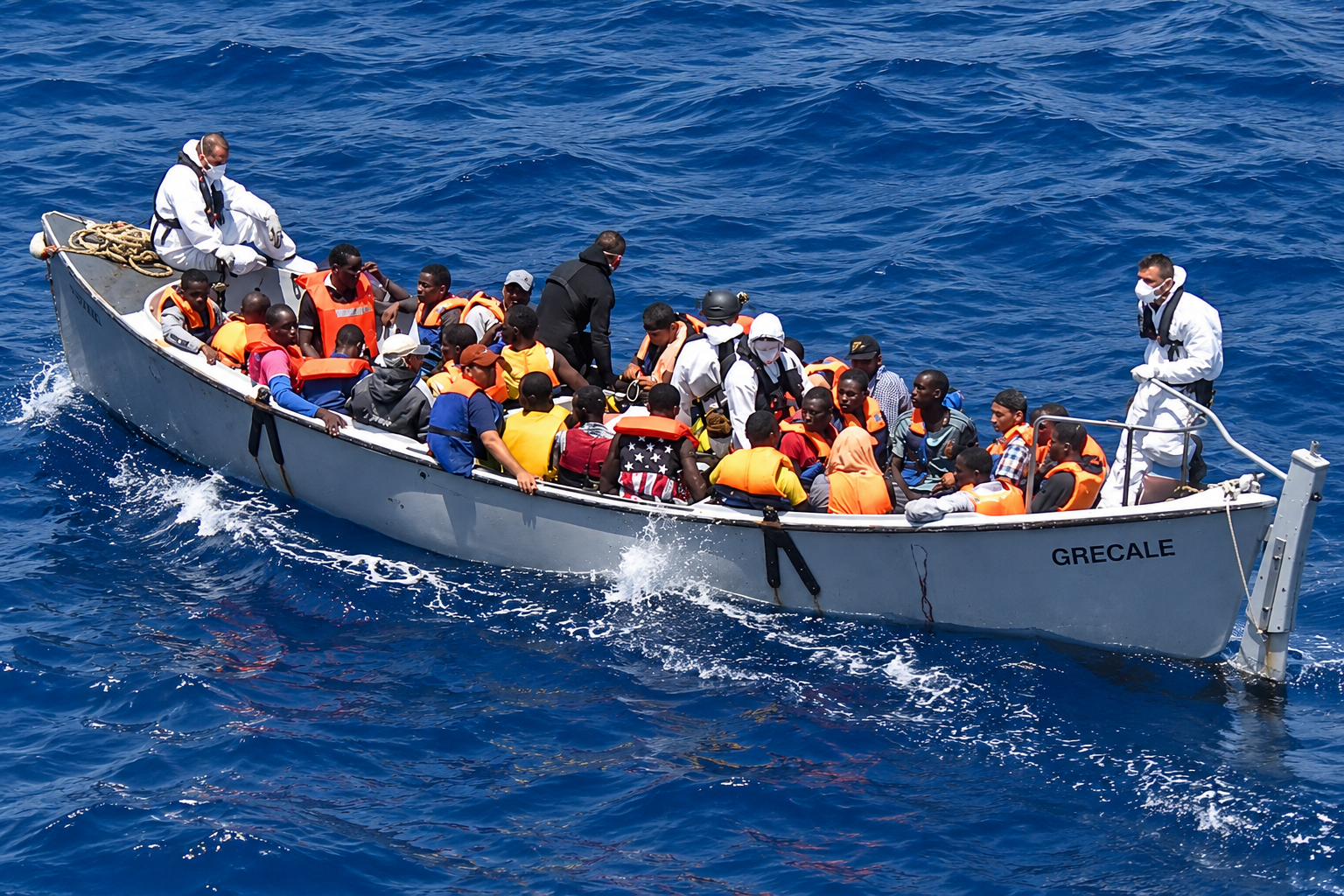
The Interception Dilemma: Coastal interdiction remains inherently reactive. While exercises like Phoenix Express and SEABORDER demonstrate strong tactical proficiency in SAR and coastal patrols, they intercept syndicates only at the final maritime exit phase rather than dismantling logistics networks upstream. Furthermore, Libya’s coast guard and naval units remain constrained by factional splits and maintenance backlogs.
The Intelligence-Sharing Ceiling: While multinational frameworks and maritime operations centers successfully pool tactical data (radar tracks, vessel IDs, and distress coordinates) during joint drills, strategic intelligence remains heavily siloed. Participating nations routinely withhold deep-source information regarding high-level financiers, corruption nodes, and inner-circle logistics due to acute mutual mistrust. Moreover, weak information linkage between East African/Sahelian conflict zones and North African maritime commands frequently leaves coastal navies vulnerable to sudden surges in trafficking vectors.
Strategic Outlook
North Africa’s security architecture is defined by a persistent dual track: pragmatic functional cooperation at sea operating alongside structural political fragility on land. While naval forces continue to refine tactical interoperability to manage maritime threats, unresolved domestic transitions in Libya, voter disengagement in Morocco, and destabilizing spillovers from the Horn of Africa will continue to test the long-term resilience of the region’s southern tier.
Author: Mauritius-based Bruneau Laurette is Director of DRCS Africa HQ and an elite defence and security consultant with over 25 years of experience in high-risk environments, maritime anti-piracy and port security. He has advised the governments of Mauritius, Seychelles and Tanzania, established specialist tactical units and trained law enforcement and correctional officers.