Photo: AP Photo/Mark Schiefelbein
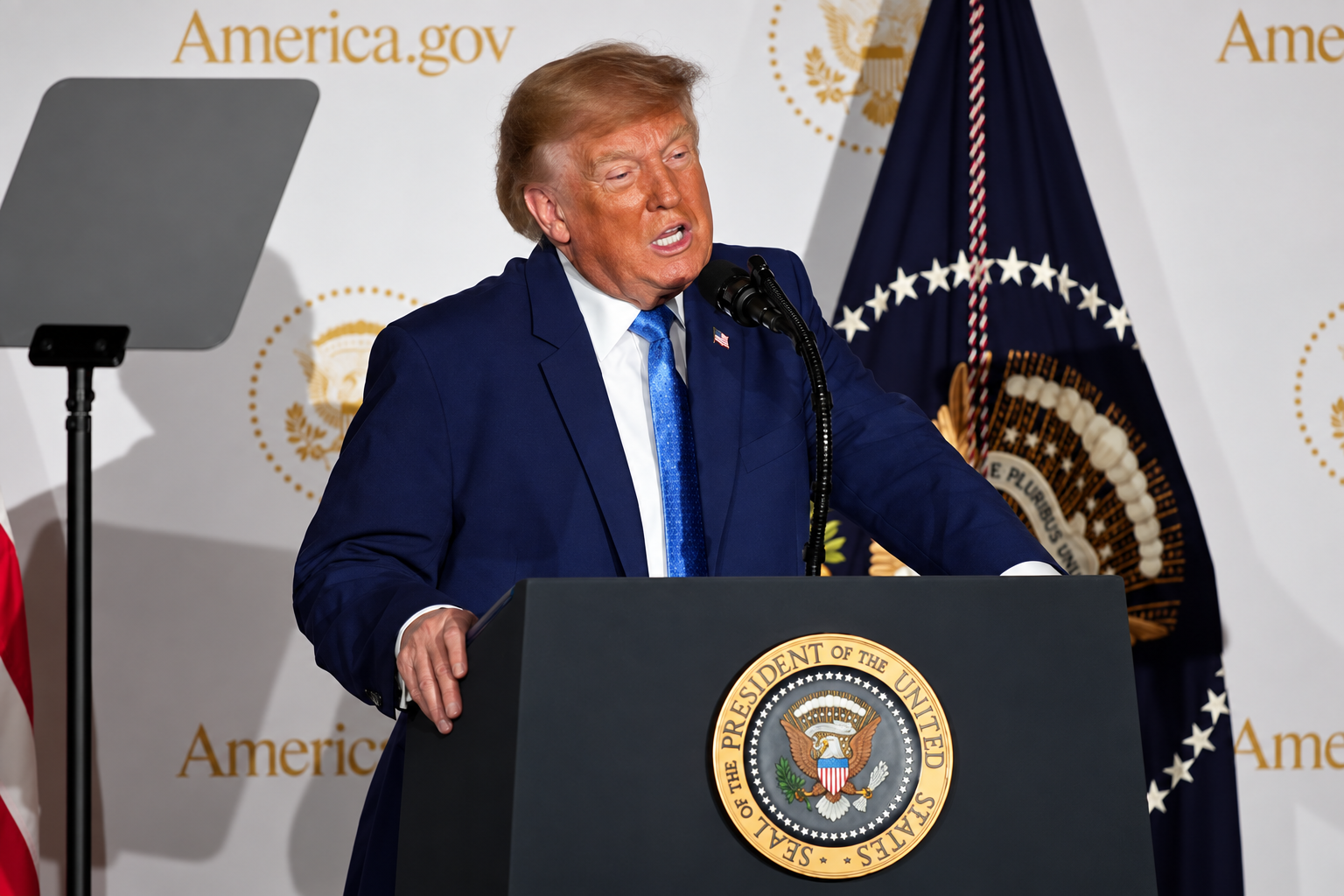
From a Security consultant’s perspective, Donald Trump’s focus on strategic island geographies—typified by high-profile rhetoric regarding Greenland, Diego Garcia, and historical postures toward Cuba—is not erratic posturing. Instead, it reflects an aggressive, transactional, and neo-realist doctrine of global power projection often dubbed the “Donroe Doctrine”.
Rather than territorial colonialism, this approach relies on controlling choke points, denying access to peer competitors (primarily China and Russia), and securing absolute operational military dominance.
Key Analytical Drivers
The Primacy of Choke Points and Power Projection:
- Diego Garcia: Serves as an indispensable, unsinkable aircraft carrier in the Indian Ocean, providing critical strategic depth for operations across the Middle East, East Africa, and South Asia. Trump’s fierce opposition to relinquishing UK sovereignty over the Chagos Archipelago underscores a security philosophy that views legal leases as vulnerable to international law and shifting political tides.
- Greenland: Regarded as the crown jewel of High North and Arctic security. As climate change opens polar shipping lanes and resource basins, control or denial of the Arctic tier is viewed as essential to countering Russian naval expansion and Chinese commercial-military footprints.
- Cuba: Long embedded in American strategic anxiety as a historical vector for extra-hemispheric adversary influence (dating back to the Cold War), representing the ultimate southern maritime approach to the U.S. mainland
- Transactional Security vs. Traditional Alliance Frameworks: Traditional multilateralism relies on long-term treaties and shared sovereignty models (such as NATO agreements). The Trump doctrine views these agreements as fragile. His interventions suggest a preference for permanent, hard-power ownership or ironclad, exclusive bilateral dominance that prevents third-party (specifically Chinese) financial or military encroachment.
- Denial Strategy (Anti-Access/Area Denial – A2/AD): The underlying security calculus is fundamentally defensive in outcome but offensive in execution. By locking down trans-oceanic and polar island nodes, the U.S. aims to create wide-perimeter defensive rings that keep adversary naval assets, intelligence-gathering platforms, and long-range strike capabilities far from the North American homeland and critical global trade corridors.
Strategic Implications
Ultimately, this mindset treats global geography as a zero-sum game. While traditional diplomats navigate international law, decolonization frameworks (such as the UK-Mauritius Chagos negotiations), and local self-determination, a hardline security lens views these processes as strategic liabilities that create vacuums for adversaries to exploit.
Author: Mauritius-based Bruneau Laurette is Director of DRCS Africa HQ and an elite defence and security consultant with over 25 years of experience in high-risk environments, maritime anti-piracy and port security. He has advised the governments of Mauritius, Seychelles and Tanzania, established specialist tactical units and trained law enforcement and correctional officers.