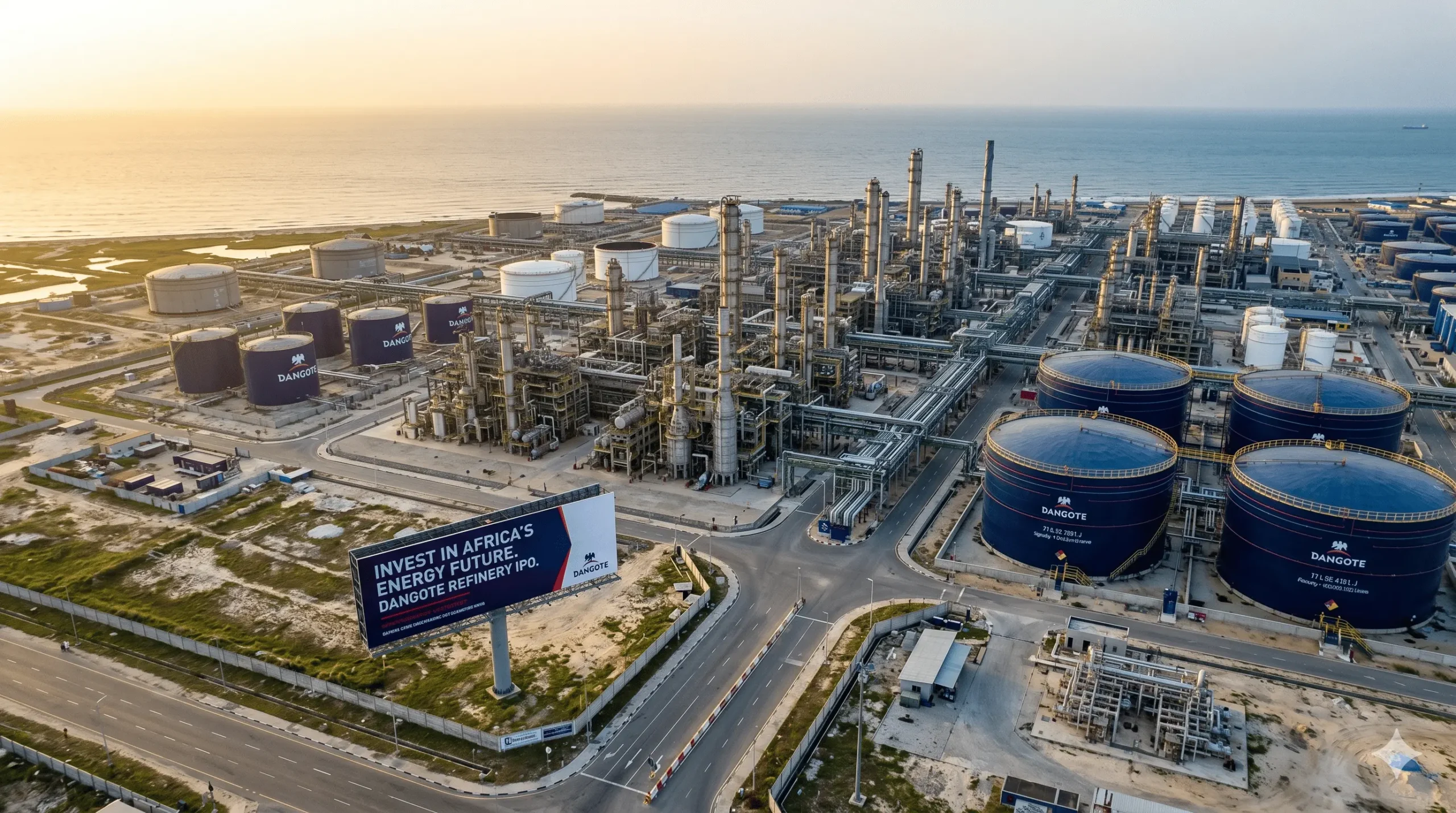
Image: Daba Markets Inc.
The Dangote Group is bridging Africa’s eastern and western coasts, leveraging mega-refining capacity to shield emerging markets from volatile global shipping chokepoints.
The Indian Ocean Connection: Strategic expansion plans – including proposed processing hubs in East Africa (such as Lamu, Kenya) – aim to seamlessly link the Atlantic basin to the Indian Ocean rim.
Operating at full nameplate capacity, the Nigerian mega-refinery acts as a regional buffer against supply shocks induced by ongoing disruptions in the Middle East and Red Sea corridors.
Bridging Two Oceans: A New Intra-African Trade Axis
For decades, the structural Achilles’ heel of African trade has been its reliance on external loops: raw materials extracted locally were shipped to international hubs, only to be re-imported as costly finished goods. Nowhere was this more evident than in the petroleum sector, where nations spanning the West African coast all the way to the Indian Ocean islands historically depended on long-haul fuel imports from Europe, India, or the Persian Gulf.
The maturation of the Dangote Petroleum Refinery into full operational capacity (processing up to 700,000 barrels per day) has fundamentally altered this paradigm. Beyond satisfying domestic Nigerian demand, the mega-complex has emerged as a continental merchant refiner, aggressively expanding its export footprint toward Central, East, and Southern Africa.
The group’s strategic vision now looks eastward. By advancing proposals to replicate refining infrastructure on Africa’s eastern seaboard – effectively creating a logistical bridge from the Atlantic to the Indian Ocean – the conglomerate is addressing the chronic energy vulnerability of East African corridors and island economies.
Insulation from Red Sea and Hormuz Vulnerabilities
The strategic value of an Africa-centric refining powerhouse has become sharply evident amid persistent maritime blockades and geopolitical friction points in the Middle East, notably around the Strait of Hormuz and the Bab el-Mandeb/Red Sea corridor.
When traditional supply routes face severe security surcharges, tanker diversions around the Cape of Good Hope, and skyrocketing war-risk insurance, African economies tied exclusively to Middle Eastern or Asian energy imports suffer immediate inflationary shocks.
- Proximity Sourcing: By supplying Euro-V grade fuels directly within the continental sphere, regional buyers minimize exposure to volatile trans-oceanic freight costs
- Alternative Barrels: With substantial surpluses in middle distillates and jet fuel, independent African refining capacity provides a vital security valve for southern and eastern trading partners seeking long-term supply arrangements outside traditional Western and Asian trade channels.
Financial Milestone and Capital Expansion
This operational dominance coincides with a watershed financial moment: the landmark initial public offering (IPO) of the Dangote Petroleum Refinery. Touted as one of the largest corporate equity offerings in African market history, the move broadens the enterprise’s institutional and retail investor base while fueling aggressive capital expenditure.
With a multi-billion-dollar expansion pipeline targeting even higher output levels by the end of the decade, the group is betting heavily on scale to drive down fixed costs per barrel. For the broader African economy and by extension, commercial partners looking toward the Indian Ocean rim, this industrial scaling represents a definitive shift: from passive price-taker in global commodity markets to active, self-sustaining price stabilizer.
Author: Mauritius-based Bruneau Laurette is Director of DRCS Africa HQ and an elite defence and security consultant with over 25 years of experience in high-risk environments, maritime anti-piracy and port security. He has advised the governments of Mauritius, Seychelles and Tanzania, established specialist tactical units and trained law enforcement and correctional officers.