Image: Mohsen Saafi
Renewed fighting around the Persian Gulf and the Bab el-Mandeb, and the reactivation of Saudi air operations against Ansar Allah, have again exposed how exposed Gulf prosperity is to a narrow band of chokepoints and a single-commodity economy. That vulnerability is prompting a question worth taking seriously, even if its answer is far from settled: could the next phase of Arab economic diversification play out not in the Gulf itself, but across the Maghreb?
The limits of the rent-based model
For half a century, growth in the Mashreq has tracked the price of oil and the security of a handful of shipping lanes. That model has delivered real prosperity, but it has also concentrated risk. Attacks on tankers in the Red Sea and around the Strait of Hormuz, and the growing non-compliance register of vessels flagged by regional monitors, are not isolated incidents; they are recurring evidence that a development strategy built on energy geography alone carries an accumulating security cost.
Sovereign wealth funds and Gulf state diplomacies have already begun hedging against this exposure, diversifying investment beyond the region and beyond hydrocarbons. Part of that diversification is geographic. North Africa, long treated as a periphery, is one of the destinations that hedge is starting to reach — not because it is risk-free, but because its risks are different in kind from those building up around the Gulf’s chokepoints.
Tunisia’s “New Carthage” pitch
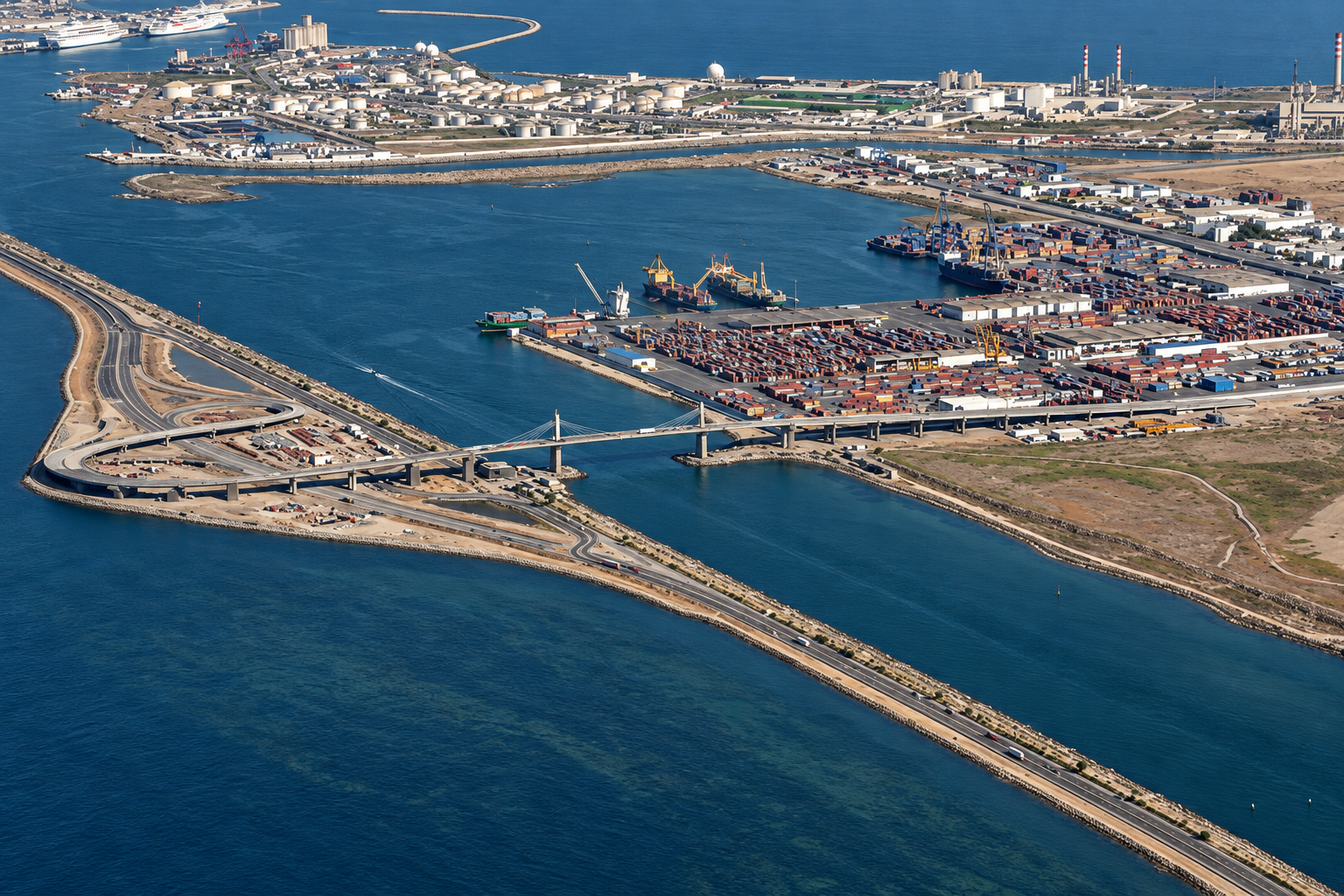
Inside Tunisia, where economic frustration remains high and growth has been sluggish for years, a competing narrative has emerged among some Tunisian strategists and consultants: a “New Carthage,” pitched as a revival of the country’s historical role as a Mediterranean crossroads and a hub for logistics, energy and services.
For Gulf investors weighing how to reduce their exposure to Middle Eastern instability, that pitch has a certain logic. A stake in Tunisia’s recovery would buy proximity to Europe and to Sub-Saharan Africa, and a diversification play largely insulated from the maritime chokepoints currently driving up insurance premiums in the Gulf and the Red Sea. It is a plausible hedge, not a guaranteed one: Tunisia’s own record on investment climate, bureaucratic delay and political stability is uneven, and any capital flow of this kind would be wagering on reform as much as on geography.
What North Africa actually brings to the table
Set the branding aside, and the Maghreb’s underlying assets are concrete enough to warrant the interest:
- Geography. The region sits between the Atlantic, the Mediterranean and the African interior, offering logistics corridors that do not depend on the Bab el-Mandeb or the Strait of Hormuz.
- Energy transition assets. Solar and wind potential, and early positioning in green hydrogen and critical minerals, give the Maghreb a plausible role in a Mediterranean energy system less centred on oil exports.
- Demographics. A relatively young, increasingly connected workforce is a genuine asset for services, digital industries and light manufacturing – though it is also a source of pressure if job creation continues to lag population growth.
A possible shift, not an inevitable one
None of this amounts to an automatic transfer of capital or prestige from the Gulf to the Maghreb. It depends on choices North African governments have so far been reluctant to make: consistent investment rules, credible anti-corruption enforcement, and political stability sustained over years rather than months. Gulf capital is diversifying under pressure, but it will go where execution risk is manageable, and on that measure the Maghreb’s record is mixed.
The disorder unsettling the Gulf does not by itself guarantee a new centre of gravity in North Africa. It does, however, open a window that regional governments – Tunisia’s included – have an interest in testing while Gulf money is actively looking for alternatives to its own neighbourhood.
Dr Nizar Chaari is a senior consultant, strategist and media executive with over 30 years of experience in media, public affairs and pan-African leadership engineering. He is President of Tunivisions Group and founder of the Tunivisions Foundation and EPIK Leaders, a pan-African youth movement active in 15 countries. He specialises in grand strategy, digital transformation and organisational leadership.