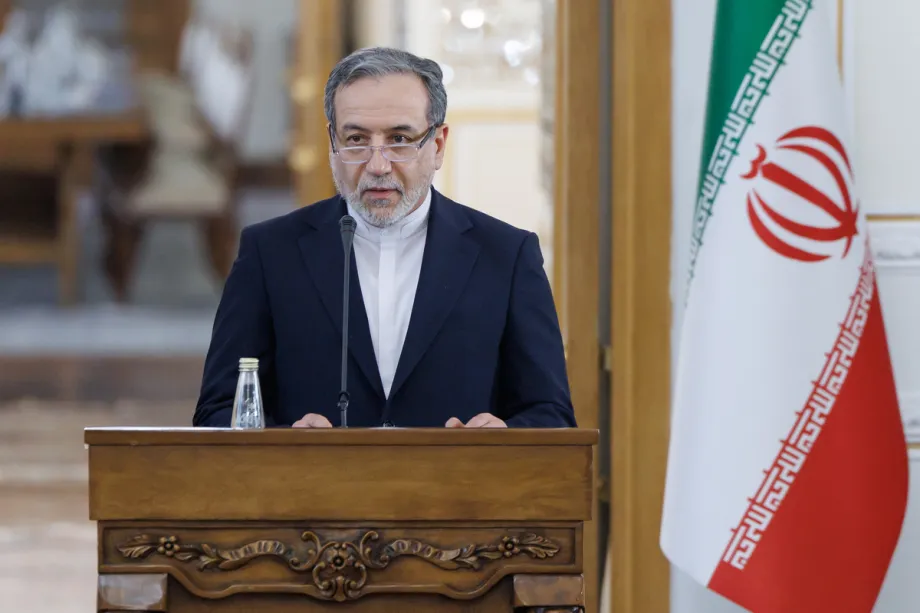
Photo: Majid Asgaripour/WANA, Reuters
The 60-day period agreed between the United States and Iran is nearing its end, with Washington once again increasing economic pressure on Tehran. President Donald Trump has announced further measures aimed at tightening the economic cost for Iran, while a renewed military escalation appears, at least for now, less likely. At the same time, an important development is taking place between Iran and Oman, which are negotiating directly over the future management of the Strait of Hormuz.
- Washington is increasing economic pressure on Iran.
- Tehran and Muscat are advancing talks over the Strait of Hormuz.
- Iran and Oman are both crucial actors because of their positions on opposite sides of the Strait.
- Saudi Arabia, the United Arab Emirates and other Gulf states also have strong incentives to avoid another regional war.
- If negotiations advance, regional states may increasingly try to manage these crises themselves rather than depending as heavily on Washington.
- This could also affect the future US military presence in the Gulf and the willingness of some regional states to allow their bases, territory or airspace to be used in a future conflict with Iran.
If Iranian-Omani negotiations continue to advance, Hormuz could become an important test of whether Gulf states are moving towards a more regionally driven security framework. This would not mean the end of the US role in the Gulf, but it could gradually reduce Washington’s centrality in crisis management. The larger question is therefore not only what happens when the 60-day period expires, but whether the current diplomatic process marks the beginning of a more autonomous regional approach to managing tensions with Iran.
Author: Mikael Darbinian is a former US diplomat, geopolitical and military analyst and founder of Security Observer. He specialises in foreign policy analysis, military affairs and international security.