Expert voices from the Global South

A platform for experts to share analysis and insight

Indonesia’s 2024 election was a victory for machinery, not just a man

ndonesia’s 2024 election is often told as the story of Prabowo Subianto’s comeback. That is true, but incomplete. The deeper story is about machinery: party coalitions, local brokers, family networks, digital campaigning and the quiet endurance of patronage politics.

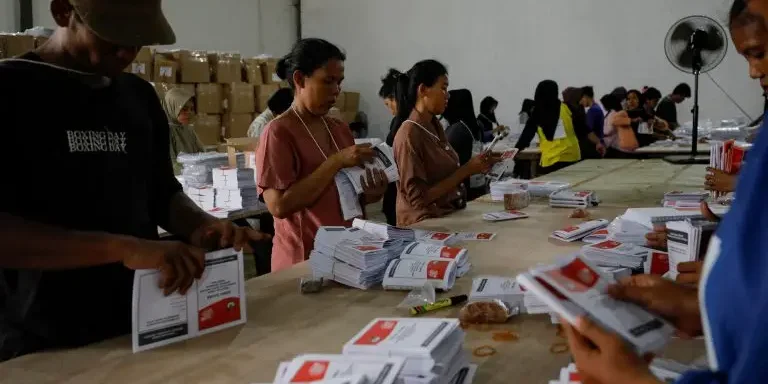
The election was enormous. Reuters reported that 204.8 million Indonesians were eligible to vote on 14 February 2024, making it one of the largest single-day democratic exercises in the world. Scale is Indonesia’s democratic achievement — and its democratic problem.

Prabowo won decisively, with AP reporting that he secured 58.6% of the vote after the Constitutional Court rejected challenges from his rivals. But landslides can blur as much as they reveal. They show popularity, yet they can also hide how uneven political resources are.

Indonesia’s democracy has never been a simple morality play between reform and authoritarianism. It is a negotiation between voters, oligarchs, religious organisations, parties, courts, celebrities and local fixers.

The question after 2024 is not whether Indonesia remains democratic. It is what kind of democracy it is becoming: competitive, transactional, centralised, or still open enough for citizens to surprise the elites.

Author: Aditya Pratama is a political sociologist and expert in Indonesian governance and Southeast Asian studies.


The Strait of Hormuz is a reminder that energy security is geography

Energy markets like to speak in abstractions: liquidity, flexibility, spare capacity, hedging. Then the Strait of Hormuz appears on[…]

Oreshnik: Russia’s hypersonic signal to the Ukraine, NATO and the West

The Oreshnik is presented by Moscow as a new-generation Russian ballistic missile with hypersonic characteristics and a high level[…]

THE TAIWAN CRUCIBLE: The contemporary global landscape is defined by an intensifying strategic competition between the United States and China…

The contemporary global landscape is defined by an intensifying strategic competition between the United States and China, with Taiwan[…]

Advanced chips AI chips Air defence AI supremacy Artificial intelligence ATACMS Autonomous weapons Ballistic missiles China China-Taiwan tensions Chip war Chris Miller Cyber warfare Democratic values Donald Trump Drones Drone warfare Export controls First Island Chain Geopolitics Global order Gulf security Gulf states Henry Kissinger Hypersonic missiles Indo-Pacific Intermediate-range missile International relations Iran Iranian ports Lvov Maritime security Military Military escalation Military technology missile Missile interception NATO Naval blockade Nuclear-capable weapons Oil markets Oreshnik Poland Ray Dalio Russia Russia-Ukraine war Semiconductors Semiconductor supply chain Storm Shadow Strait of Hormuz Strategic communication Strategic competition Strategic depth Strategic deterrence Supply chain security Taiwan Taiwan Strait Technology war Thucydides Trap TSMC Ukraine United States US-China rivalry USA Venezuela War of attrition Western military aid