The contemporary global landscape is defined by an intensifying strategic competition between the United States and China, with Taiwan emerging as the most volatile flashpoint. This report advances the thesis that AI supremacy, fuelled by the control of advanced semiconductor manufacturing, is the primary driver of this potential conflict.
The Semiconductor Chokepoint
Taiwan is the geopolitical epicentre of the world’s most critical technology.
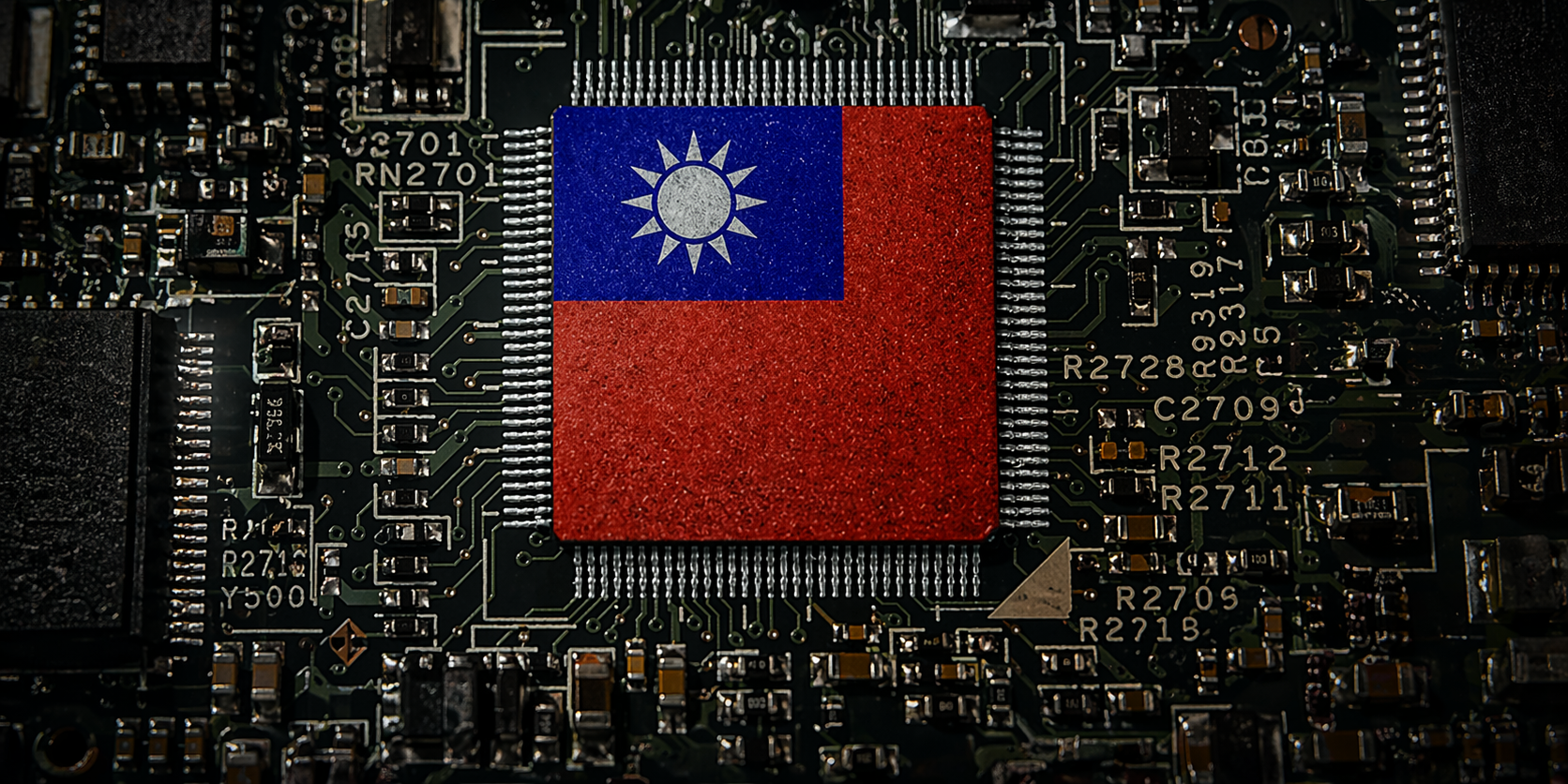
- Manufacturing Dominance: TSMC produces over 90% of the world’s most sophisticated chips (below 10nm) required for AI.
- AI Hardware Base: Industry analysis indicates that nearly 100% of advanced AI chips are manufactured in Taiwan.
- Economic Impact: A takeover would cripple the global AI chip supply and potentially hand a decisive advantage to China.
Theoretical Frameworks of Conflict
Current tensions are illuminated through established historical and economic lenses:
- Thucydides Trap: The structural stress of a rising power (China) challenging a ruling power (US) has historically resulted in war in 12 out of 16 cases.
- The Big Cycle: Ray Dalio posits that the US shows signs of imperial decline while China is rising rapidly in innovation and technology.
- Erosion of Order: Henry Kissinger warns that the lack of international standards for new technologies like AI creates a deficit of global consensus.
Strategic and Civilizational Stakes
Taiwan’s importance extends beyond silicon into critical geography and ideology:
- The First Island Chain: Taiwan is a pivotal node for containing maritime expansion and protecting vital sea lanes.
- Democratic Model: As a prosperous democracy, Taiwan serves as an implicit challenge to authoritarian models.
- The “Yug Shift”: Interpreting Bibhu Dev Mishra’s work, a conflict could represent a “global war” catalysing an epochal civilizational transformation.
I. Introduction: The Precipice of Conflict
A. Setting the Stage The strategic competition between the United States and China spans economic, military, and technological domains. Taiwan has emerged as the most dangerous flashpoint, capable of igniting direct confrontation between these leading global powers. This rivalry is progressively defined by the quest for technological supremacy.
B. The Core Thesis The pursuit of Artificial Intelligence (AI) supremacy, intrinsically linked to the control over advanced AI chip semiconductor manufacturing, constitutes a primary driver of potential conflict. Taiwan’s role as the near-monopolistic producer of these chips makes it the geopolitical epicentre of this struggle.
II. Theoretical Lenses on a Shifting World Order
A. Kissinger’s Framework Henry Kissinger views the current international system as suffering from a deficit of consensus on global “legitimacy”. He specifically highlights the dangers of the cyber and AI ages, where states lack international standards of conduct.
B. Dalio’s “Big Cycle” Ray Dalio’s model suggests the US is in the later stages of its cycle, characterized by high debt and internal conflict, while China is rising in innovation and economic output. The battle for AI chips is a struggle for control over the “Innovation and Technology” determinants of the next cycle.
C. Allison’s Thucydides Trap The “Thucydides Trap” describes the danger when a rising power becomes more confident and a ruling power fears losing its edge. This fits the US-China dynamic, where interests, fear, and honour drive both parties toward the precipice.
III. The Chip War: Semiconductors as the New Geopolitical Fulcrum
A. Miller’s Thesis Chris Miller argues that microchips are the “new oil”—the scarce, foundational resource of the 21st century. Control over chip design and manufacturing now shapes global economic and military power.
B. Taiwan’s Unmatched Supremacy
- TSMC: Manufactures over 90% of the world’s most sophisticated chips (sub-10nm).
- AI Impact: Elon Musk notes that “100% of advanced AI chips are made in Taiwan”.
- Silicon Shield: While intended to deter attack, Taiwan’s indispensability also makes it an extraordinarily valuable prize.
C. The Tech War The US uses export controls to slow China’s military and AI progress. China is retaliating by investing over $150 billion to achieve domestic semiconductor self-sufficiency.
IV. AI Supremacy: The Ultimate Prize
A. Military and Economic Implications AI is considered the cornerstone of a “third military revolution”.
- Warfare: AI will revolutionize combat through autonomous systems, cyber warfare, and intelligence analysis.
- Economy: AI is a powerful engine of productivity; nations that lead will capture vast economic value.
- Market: The AI chip market is projected to exceed $500 billion by 2033.
B. Taiwan as the Indispensable Battleground Control over AI chip supply chains translates directly to geopolitical power. Because the hardware base for AI resides in Taiwan, the island sits at the centre of the global contest for dominance.
V. Taiwan: A Multifaceted Strategic Imperative
A. Geopolitical and Military Significance
- First Island Chain: Taiwan is a pivotal node for containing China’s maritime expansion into the Western Pacific.
- Democratic Values: Supporting Taiwan is framed as upholding global democratic movements against authoritarian expansion.
- US Credibility: Failure to prevent forced unification would severely damage America’s standing with its Indo-Pacific allies.
B. Economic Vulnerabilities Beyond chips, Taiwan accounts for 90% of the global AI server market. A conflict would halt trillions of dollars in goods passing through the Taiwan Strait.
VI. The “Yug Shift” and Synthesis
A. Mishra’s Theory Bibhu Dev Mishra predicts the end of the “Kali Yuga” era around 2025. He anticipates civilizational collapse via “global wars” and environmental catastrophes by 2040.
B. Synthesis of Convergence The convergence of historical power transitions (Dalio, Allison), eroding world order (Kissinger), and technological competition (Miller) points toward conflict. A US-China war over Taiwan would qualify as the “global war” cataclysmic event described by Mishra, potentially ushering in a profound civilizational transition.
VII. Potential Scenarios and Strategic Pathways
A. Conflict Scenarios
- Gray-Zone Coercion: Cyberattacks, disinformation, and military incursions to wear down Taiwan’s morale.
- Blockade: A naval and air blockade to force Taipei to negotiate, risking direct military confrontation with the US.
- Full-Scale Invasion: A dangerous scenario drawing in the US, Japan, and Australia, with catastrophic economic impacts.
B. Global Impacts A conflict would cripple industries reliant on advanced chips, triggering a global recession or depression. It would also likely fracture the technological world into hostile, disconnected spheres.
C. Strategic Pathways
- De-escalation: Establish robust crisis communication channels and military-to-military dialogues.
- AI Norms: Initiate multilateral dialogues to establish international codes of conduct for militarized AI.
- Resilience: Accelerate efforts to diversify and “friend-shore” critical semiconductor supply chains.
Author: Gopal Kumar is the founder of borderless.VIP®, with a background in global investment management, a published visual and literary artist.