Image: Tasnim News Agency/AP
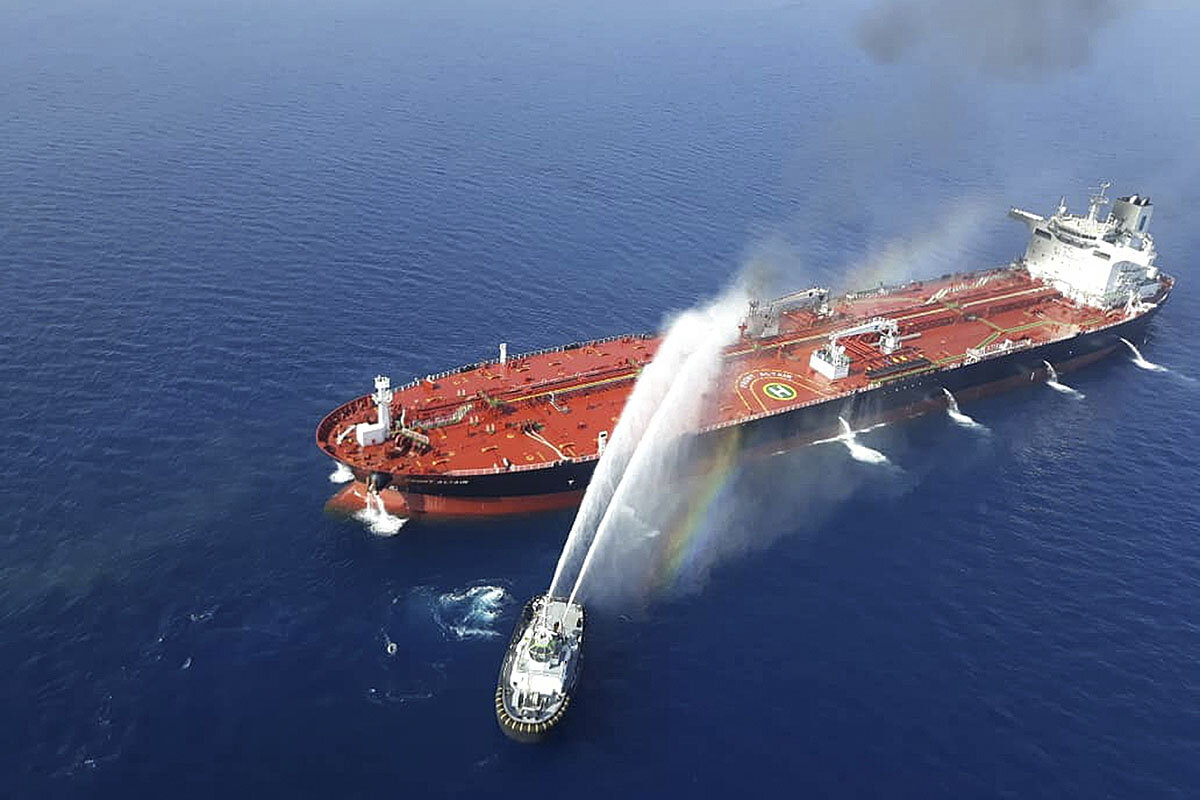
The maritime-security environment around the Strait of Hormuz has entered another potentially consequential phase following the latest update by Iran’s Persian Gulf Strait Authority (PGSA), which has expanded its Non-Compliant Vessels (NCV) list to 77 vessels.
The development is significant because the PGSA list is not merely an administrative register. The authority has previously warned that vessels appearing on the list may face restrictions on future passages, fines, detention and other enforcement measures.
Earlier reporting had placed the list at 45–46 vessels in August. The latest expansion demonstrates that the situation is evolving rapidly rather than representing a closed blacklist.
THE 77 VESSELS NOW IDENTIFIED BY PGSA
According to the updated list , the vessels and their IMO numbers are:
- KIKU — IMO 9329796
- MUBARAZ — IMO 9074626
- MINOAN PIONEER — IMO 9471630
- VADIN — IMO 9324100
- HAFEET — IMO 9928009
- AL REKAYYAT — IMO 9397339
- WEDYAN — IMO 9524970
- CYPRUS PROSPERITY — IMO 9595216
- AL RAWDAH — IMO 9734513
- RASHEEDA — IMO 9443413
- LEBRETHAH — IMO 9976927
- MAHA ROOS — IMO 9231004
- GFS GALAXY — IMO 9401271
- AL BAHYAH — IMO 9937799
- MOMBASA B — IMO 9739501
- STOLT MAGNESIUM — IMO 9739317
- AL WATAN — IMO 9615030
- NAVIG8 MESSI — IMO 9482859
- SINGAPORE PROSPERITY — IMO 9419967
- DISHA — IMO 9250713
- GASLOG SHANGHAI — IMO 9600528
- LUBNA — IMO 9489065
- HAZI 1 — IMO 7802598
- RYUJIN — IMO 8206818
- ANNA BARBARA — IMO 9407500
- SUNBIRD ARROW — IMO 9323821
- MINOAN DIGNITY — IMO 9294484
- MARIA — IMO 9917828
- KAVOMALEAS — IMO 1042823
- MARDAN — IMO 9360453
- SWEDEN PROSPERITY — IMO 9588392
- JARNAIN — IMO 9823546
- KAIFAN — IMO 9656046
- NISSOS KEA — IMO 9920758
- ROTTERDAM ENERGY — IMO 9508859
- AL HAMRA — IMO 9074640
- UMM AL ASHTAN — IMO 9074652
- MARIGOLD LNG — IMO 9230062
- BANASTAR — IMO 9228045
- NAVARA — IMO 9241798
- NISSOS HERACLEA — IMO 9419618
- ASHLEY — IMO 9258466
- MRAWEH — IMO 9074638
- AL LULU — IMO 9583627
- ABU DHABI-III — IMO 9489027
- TARIF — IMO 9828390
- DELMA — IMO 9719408
- ZIXUAN — IMO 9317298
- IXORA — IMO 9940459
- OLYMPIOS GAS — IMO 1069637
- ASPHALT ALLIANCE — IMO 9287883
- YAQUT — IMO 9917878
- ZAYNAH — IMO 9854703
- AJWAD — IMO 9830795
- GAS MARAKUA — IMO 9240421
- EL GAIA — IMO 9325336
- BURGAN — IMO 9656022
- ALFONSO — IMO 9256298
- GAS WARICH — IMO 9364382
- RIESCO — IMO 9251822
- SILVER SHINE — IMO 9421415
- METRO VENETIAN — IMO 1013391
- AL SALAM II — IMO 9328168
- SIDR — IMO 9854715
- MALAYSIA PROSPERITY — IMO 9395305
- PSERIMOS — IMO 1033810
- PORTUGAL PROSPERITY — IMO 9385843
- ON PRIDE — IMO 9945318
- ON PEACE — IMO 9893204
- ON PHOENIX — IMO 9893228
- SINBAD — IMO 9413688
- RIYAN STAR — IMO 9156761
- AL DAAYEN — IMO 9325702
- OTTOMAN COURTESY — IMO 9788708
- XING SHENG — IMO 9384904
- AL RIQQA — IMO 9534808
- AL KOUT — IMO 9653434
The PGSA’s own Non-Compliant Vessels page confirms the existence of the register and identifies vessels including KIKU, MUBARAZ, MINOAN PIONEER, VADIN and HAFEET.
WHY THIS MATTERS
The central security issue is not simply that 77 ships have been named. It is what the list represents. The Strait of Hormuz is one of the world’s most strategically important maritime chokepoints. Any mechanism capable of restricting, detaining or penalising commercial vessels transiting the waterway introduces an additional layer of geopolitical and operational risk into global shipping.
Recent reporting has already documented the escalation surrounding PGSA’s vessel list and the possibility of fines and confiscation.
The consequences extend beyond Iran and the Gulf. They potentially reach: Gulf states → Arabian Sea → India → East Africa → Indian Ocean island states → Southeast Asia.
For Mauritius, this is particularly relevant. Mauritius is positioned within an increasingly important Indian Ocean maritime environment, making vessel screening, port intelligence and maritime-domain awareness strategic rather than merely regulatory functions.
THE IMO NUMBER IS THE CRITICAL INTELLIGENCE KEY
There is another important lesson in the PGSA list. A ship can change its:
- name
- flag
- owner
- manager
- charterer
- commercial operator
Its IMO number, however, is designed to provide a persistent vessel identity. Consequently, authorities should never rely solely on a vessel’s name when conducting security screening. For every vessel on the 77-ship list, the appropriate intelligence process should be:
IMO number ,ownership , beneficial ownership , flag history , management company , classification ,insurance , charterer , cargo → port calls , AIS history ,STS activity → sanctions exposure. That process can reveal connections that are invisible from the ship’s current name.
FROM BLACKLIST TO MARITIME INTELLIGENCE
Security Observer believes the list should not simply be circulated as a “blacklist.”
It should become an intelligence screening database.
A vessel appearing on the PGSA NCV list does not automatically mean that the vessel is involved in criminal activity or sanctions evasion.
There may be different reasons for PGSA’s designation, and each vessel must be assessed individually.
The distinction is essential:
Non-compliance is an intelligence indicator — not, by itself, proof of criminality.
This is particularly important for legitimate shipowners, insurers, charterers, ports and seafarers whose commercial interests could be seriously affected by inaccurate interpretations.
THE INDIAN OCEAN SHOULD PAY ATTENTION
For regional maritime-security agencies, the question should now be:
- Where are these 77 vessels going?
- Their current location is only one element
- More important is their movement pattern
- A serious monitoring programme should examine
- previous Hormuz transits
- Arabian Sea movements
- Indian port calls
- East African destinations
- Mauritius and Seychelles calls
- Sri Lankan and Maldivian movements
- Singapore and Southeast Asian connections
- ship-to-ship transfers
- AIS gaps
- changes of ownership or flag
- unusual cargo movements
This is where maritime security moves beyond traditional port inspection into strategic intelligence.
A NEW CHALLENGE FOR PORT AUTHORITIES
The emerging environment requires ports to move from: “Who is the vessel?” to: “Who ultimately controls the vessel, where has it been, what has it carried, and why is it here?”
For Mauritius, that means strengthening cooperation between maritime authorities, port-security structures, customs, financial intelligence, law enforcement and maritime-domain-awareness platforms.
A vessel should ideally be screened before arrival, not only after it enters the port.
SECURITY ASSESSMENT
The expansion of the PGSA Non-Compliant Vessels register to 77 ships represents a significant development in the security architecture surrounding the Strait of Hormuz. It demonstrates how maritime regulation, geopolitical confrontation, sanctions enforcement, commercial shipping and national security are becoming increasingly interconnected. The immediate concern is not that 77 vessels are necessarily dangerous. The concern is that 77 vessels now require enhanced intelligence attention.
The maritime industry can no longer view vessel compliance as an isolated technical issue.
In the current geopolitical environment:
- A vessel’s identity is intelligence.
- Its ownership is intelligence.
- Its route is intelligence.
- Its cargo is intelligence.
- And its port calls are intelligence.
- For the Indian Ocean, the message is clear:
- Know the vessel before you know the cargo.
The PGSA list should therefore be regarded as an early-warning maritime intelligence dataset, requiring systematic IMO-by-IMO verification rather than simple publication or political interpretation.
The PGSA said the list of violating vessels has been updated and urged relevant entities to refrain from providing services to the listed vessels.
Thus the message is more than clear from.the relevant authorities.;
“Insurance companies, P&I clubs and classification societies are warned to refrain from providing services to these vessels in order to avoid the consequences arising from relations with them.”
Author: Mauritius-based Bruneau Laurette is Director of DRCS Africa HQ and an elite defence and security consultant with over 25 years of experience in high-risk environments, maritime anti-piracy and port security. He has advised the governments of Mauritius, Seychelles and Tanzania, established specialist tactical units and trained law enforcement and correctional officers.