Assessment level: Strategic / Maritime Security
The reported statement by US President Donald Trump that the United States could declare the Strait of Hormuz a US “territory” should be understood within a broader transformation of the Gulf conflict: the dispute is moving from freedom of navigation toward a contest over who exercises effective control over one of the world’s most important maritime chokepoints.
The legal validity of a unilateral territorial claim is highly questionable. The strategic consequences, however, could be substantial even without formal annexation.
The central Security assessment is:
The greatest danger is not a formal change of sovereignty. It is the emergence of de facto control over commercial navigation through military presence, blockade, inspection, escort, tolls or exclusion measures.
That distinction is critical.
1. Strategic Situation
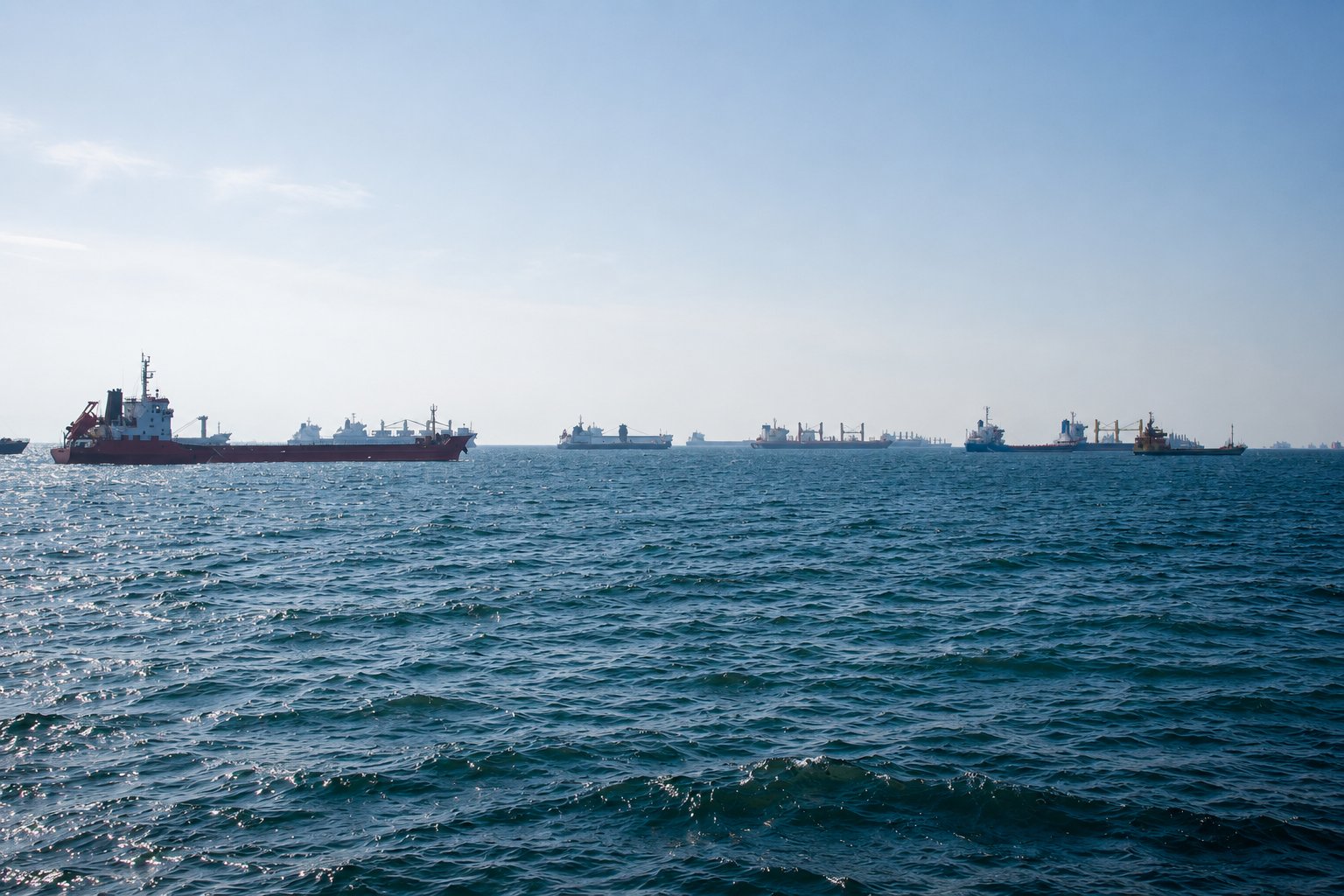
The Strait of Hormuz connects the Persian Gulf with the Gulf of Oman and Arabian Sea. Its strategic value derives from geography: vessels transporting energy commodities from Gulf producers must pass through a relatively constrained maritime corridor. The current confrontation introduces three overlapping dimensions:
- Military: US and Iranian forces are operating in an increasingly contested maritime environment.
- Economic: Control or disruption of Hormuz provides enormous leverage over energy markets.
- Legal: Competing claims concerning territorial waters, navigation rights, blockade and control of commercial shipping create a potentially dangerous ambiguity.
The result is a classic chokepoint-security crisis.
The Strategic Equation
The situation can be represented as:
Military Control + Maritime Chokepoint + Energy Dependence = Global Strategic Leverage
Iran possesses geographical proximity and asymmetric maritime capabilities. The United States possesses overwhelming blue-water naval capability, airpower, surveillance, logistics and coalition potential. Neither side necessarily needs to achieve complete physical control of the Strait to impose significant costs on the other. This produces an important concept:
Partial Denial
A maritime power does not necessarily need to close a strait completely. If it can make commercial operators believe that:
- passage is unsafe;
- insurance is prohibitively expensive;
- vessels may be inspected;
- ships could be targeted;
- ports may become inaccessible; or
- schedules cannot be guaranteed,
- commercial traffic may reduce voluntarily.
That can create economic closure without formal closure.
The “US Territory” Statement — Legal vs Strategic Reality
There must be a clear distinction between political declaration and internationally recognised sovereignty. A presidential statement cannot independently transfer sovereignty over an international maritime waterway. The Strait is affected by the law of the sea, including rules concerning territorial seas, international navigation and transit through strategic maritime passages.
Consequently:
- Political declaration ≠ sovereignty
- Naval presence ≠ sovereignty
- Blockade ≠ sovereignty
But:
Sustained military control + control of shipping = de facto strategic influence
That is where the real concern lies.
The Blockade Question
The reported US blockade is potentially more consequential than the territorial rhetoric.
A blockade can affect:
- Commercial shipping: Vessels may delay departures or seek alternative routes.
- Marine insurance: War-risk premiums can increase dramatically.
- Chartering: Owners may demand higher freight rates or refuse voyages.
- Energy prices: Oil and LNG markets react rapidly to perceived supply risk.
- Food security: Higher energy and freight costs eventually affect agricultural production and food imports.
- Developing economies: Countries without strategic petroleum reserves or strong foreign-exchange buffers become disproportionately exposed.
5. The Iran Asymmetric Strategy
Iran does not need to defeat the US Navy conventionally. Its strategic objective could instead involve denial, disruption and uncertainty. Potential tools include:
- fast attack craft;
- missiles;
- drones;
- mines;
- electronic warfare;
- cyber operations;
- maritime surveillance;
- harassment of commercial vessels; and
- selective disruption rather than permanent closure.
This creates a difficult security problem. A conventional military force seeks to defeat the opponent. An asymmetric maritime force can instead seek to increase the cost of commercial navigation beyond an acceptable threshold.
6. The Commercial Vessel Becomes the Strategic Vulnerability
This is one of the most important developments. Merchant ships are not designed for high-intensity naval warfare. Their vulnerabilities include:
- predictable routes;
- limited defensive capability;
- dependence on port infrastructure;
- AIS exposure;
- crew fatigue;
- limited manoeuvrability;
- insurance requirements; and
- dependence on pilots and navigation services.
Therefore, commercial shipping can become the pressure point between military actors. A single attack against a tanker or container ship can produce a market reaction far larger than the physical damage to the vessel.
7. Escalation Ladder
Security Observer assesses the following escalation ladder:
- Level 1 — Political confrontation: Statements, threats and diplomatic pressure.
- Level 2 — Maritime harassment: Warnings, interceptions, inspections and navigational restrictions.
- Level 3 — Selective disruption: Individual commercial vessels targeted or prevented from transiting.
- Level 4 — Limited blockade: Military forces begin systematically controlling access.
- Level 5 — Maritime kinetic confrontation: Missiles, drones, mines or naval engagements.
- Level 6 — Regional escalation: Attacks expand toward Gulf bases, ports, energy infrastructure and neighbouring states.
- Level 7 — Global maritime-economic crisis: Major shipping diversion, energy shock and widespread supply-chain disruption.
The critical objective for international maritime security is preventing movement from Level 2–3 into Level 4.
8. The Bab el-Mandeb Connection
This is particularly important for Indian Ocean security. Hormuz cannot be analysed in isolation from the Red Sea and Bab el-Mandeb. The maritime system is interconnected:
- Persian Gulf
- Gulf of Oman
- Arabian Sea
- Indian Ocean
- Bab el-Mandeb / Red Sea
- Suez
If both Hormuz and Bab el-Mandeb become unreliable, shipping companies face a fundamentally different operating environment. This creates a potential:
Dual Chokepoint Crisis – Hormuz disruption + Bab el-Mandeb disruption could force longer voyages around the Cape of Good Hope while simultaneously increasing fuel consumption, insurance costs, crew exposure and freight rates.
9. Indian Ocean Strategic Consequences
The Indian Ocean could become the principal secondary theatre. Shipping diverted away from the Middle East and Red Sea may increase traffic around:
- Arabian Sea;
- western Indian Ocean;
- Mozambique Channel;
- Madagascar approaches;
- southern African routes; and
- Cape of Good Hope.
That creates additional requirements for:
- Maritime Domain Awareness (MDA);
- AIS monitoring;
- port security;
- coastal surveillance;
- anti-piracy capability;
- cybersecurity;
- Search and Rescue; and
- protection of critical maritime infrastructure.
10. Mauritius Risk Assessment
For Mauritius, the threat is not necessarily a direct military attack. The principal exposure is economic and maritime dependency. Potential transmission mechanism:
- Hormuz crisis;
- higher oil prices;
- higher bunker fuel costs;
- higher freight rates;
- Hiigher insurance;
- longer shipping routes;
- increased import costs;
- food and energy inflation; and
- pressure on households and businesses.
A prolonged crisis could therefore become a national resilience issue, rather than merely a foreign-policy issue.
11. Mauritius Maritime Security Priorities
Bruneau Laurette recommend is that Mauritius maintain heightened monitoring of:
Maritime domain
- commercial vessel movements;
- tanker traffic;
- suspicious AIS behaviour;
- unusual vessel loitering; and
- changes in shipping routes.
Port security
- container screening;
- access control;
- waterside surveillance;
- underwater security;
- drone detection; and
- cyber protection.
Energy security
- fuel inventories;
- alternative suppliers;
- strategic reserves;
- tanker scheduling; and
- emergency procurement mechanisms.
Supply-chain resilience
- food imports;
- fertiliser;
- pharmaceuticals;
- industrial inputs; and
- critical spare parts.
12. Three Strategic Scenarios
- Scenario A — Controlled confrontation: The US and Iran maintain military pressure but avoid sustained attacks on commercial shipping. Result: elevated insurance and energy prices, but global maritime trade continues. Probability: comparatively high.
- Scenario B — Maritime containment: Both sides increasingly restrict commercial navigation. Shipping companies begin avoiding Hormuz or operating under military escort. Result: major increase in freight, insurance and energy costs. Probability: significant.
- Scenario C — Chokepoint crisis: A major commercial vessel is destroyed or severely damaged, followed by retaliation. Hormuz becomes effectively inaccessible to a significant proportion of commercial shipping. Result: global energy shock, massive shipping diversion and rapid expansion of the crisis into the Indian Ocean. Probability: lower than Scenario A/B, but impact is extreme.
13. Intelligence Indicators to Monitor
Security Observers should establish an early-warning dashboard around the following indicators:
Red indicators
- Deployment of additional mine-countermeasure forces.
- Large-scale naval concentration around Hormuz.
- Repeated attacks against merchant shipping.
- Commercial vessels instructed to avoid specific lanes.
- Sharp increases in war-risk insurance.
- Major tanker diversions.
- Closure or restriction of Gulf ports.
- GPS/GNSS interference.
- Large-scale AIS anomalies.
- Iranian announcement of compulsory passage permissions.
- US declaration of permanent maritime exclusion zones.
- Attacks against energy infrastructure.
- Military escort requirements becoming widespread.
- Major international shipping companies suspending Hormuz transit.
The appearance of several indicators simultaneously would signal movement from political crisis to systemic maritime disruption.
14. Strategic Conclusion
The Trump statement should therefore not be interpreted solely as a question of whether the United States can legally “own” the Strait of Hormuz.
The deeper strategic issue is who controls the movement of commercial vessels through Hormuz, under what legal authority, and what happens when competing military powers attempt to impose that control simultaneously? This is now a question of maritime order. The international community has a direct interest in preventing strategic waterways from becoming instruments of unilateral coercion. For the Indian Ocean, the lesson is equally clear:
Security planners should no longer treat Hormuz, Bab el-Mandeb, the Red Sea and the western Indian Ocean as separate security problems. They form one interconnected maritime system. A crisis in one chokepoint can rapidly redistribute risk to another.
Strategic Rating
- Global maritime security: Critical
- Gulf maritime security: Critical
- Commercial shipping: Very high risk
- Indian Ocean spillover: High
- Mauritius economic exposure: High
- Escalation/miscalculation risk: Very high
Strategic warning: The next major indicator to watch is not another political declaration. It is whether military control of commercial navigation becomes institutionalised through permanent exclusion zones, compulsory inspections, escorts, tolls or systematic denial of passage.
That would mark a qualitative shift from war rhetoric to a new contest over the international maritime order.
Author: Mauritius-based Bruneau Laurette is Director of DRCS Africa HQ and an elite defence and security consultant with over 25 years of experience in high-risk environments, maritime anti-piracy and port security. He has advised the governments of Mauritius, Seychelles and Tanzania, established specialist tactical units and trained law enforcement and correctional officers.