Photo: VCG
Diplomatic Brinkmanship: Trump Halts Iran Strikes Following Regional Push for Hormuz Deal, but Mixed Signals Persist in Tehran
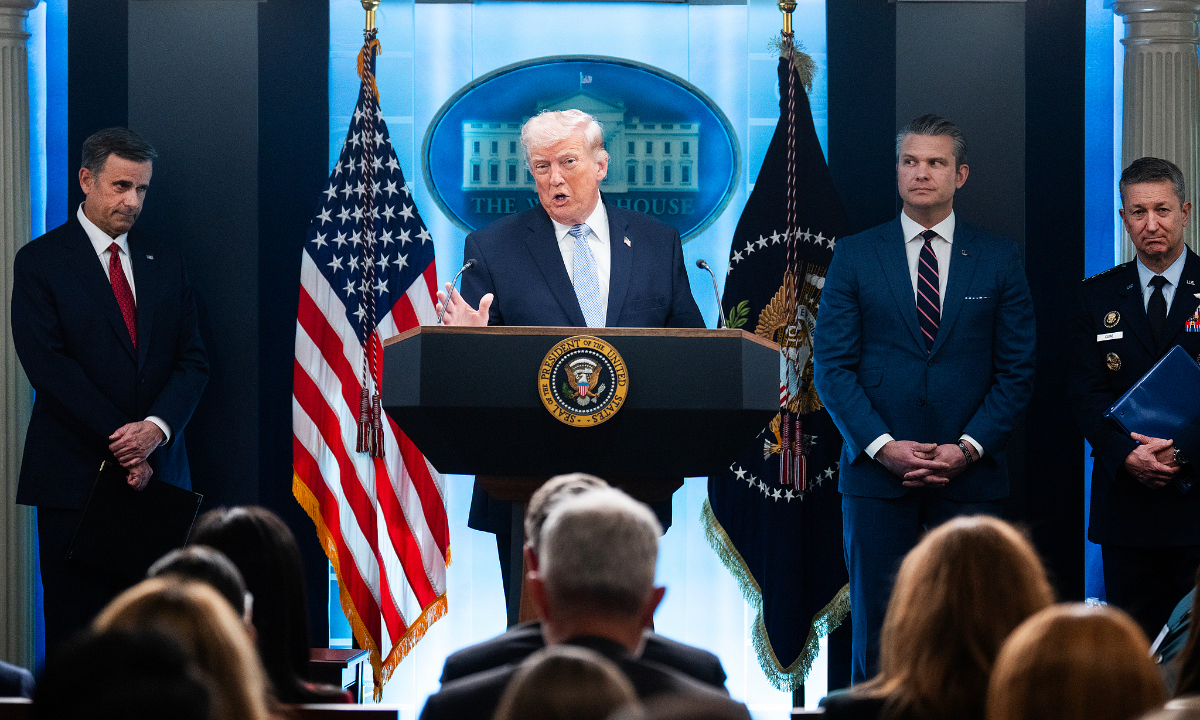
WASHINGTON/TEHRAN — U.S. President Donald Trump announced the cancellation of imminent joint strikes against Iran after regional mediators and Iranian diplomatic channels signalled willingness to negotiate a comprehensive framework to reopen the critical Strait of Hormuz.
The sudden de-escalation follows intense diplomatic scrambling over the weekend, catalysed by appeals from Gulf partners and an emerging compromise over maritime transit rights. However, stark contradictions between Tehran’s diplomatic corps and its military command underscore the fragile and volatile nature of the temporary reprieve.
The Architecture of a Fragile Accord
The breakthrough occurred late Saturday when President Trump posted on social media that he had aborted planned military operations. According to Trump, the decision came in response to urgent requests from regional states and Iranian interlocutors aiming to rapidly secure a deal that guarantees the “immediate, complete, and total opening” of the Strait of Hormuz alongside permanent curbs on Iran’s nuclear ambitions.
Diplomatic sources revealed that the framework underpinning the pause was formulated through intense back-channel mediation led by Qatar and the United States. Under the reported arrangement, commercial traffic entering the Persian Gulf would transit through Iranian territorial waters, while outbound vessels would exit via Omani waters.
The tentative arrangement addresses a central choke point in the months-long conflict, which has seen shipping lanes heavily disrupted, cargo vessels rerouted, and global energy markets sent into turbulence.
Regional Pressure and the Risk of Asymmetric Control
The U.S. reversal was heavily influenced by regional anxieties. Gulf capitals, led by Saudi Arabia and the United Arab Emirates, lobbied heavily against an impending American strike package—which threatened to target vital energy infrastructure—fearing catastrophic economic fallout and immediate asymmetric retaliation against regional states hosting Western assets.
Yet, the proposed maritime routing has sparked sharp warnings from security analysts. Granting Iran regulatory and physical control over inbound traffic via its territorial waters institutionalises Tehran’s leverage over international trade.
Historically, the Islamic Revolutionary Guard Corps (IRGC) has utilised this proximity to monitor, board, or restrict vessels deemed “hostile,” including Western commercial shipping and U.S. Navy units. Critics argue that a reopened strait under such parameters risks substituting an outright blockade with legalised maritime coercion.
Dual-Track Messaging in Tehran
Compounding these strategic risks is a glaring disconnect within Iran’s power structure. While Foreign Minister Abbas Araghchi reportedly engaged constructively with mediators in Muscat to advance the diplomatic track, hardline military factions have publicly rejected the narrative of capitulation.
State-aligned Iranian media flatly denied that Tehran had pleaded for a halt to US airstrikes, characterising Washington’s statements as psychological warfare. Meanwhile, military leadership has openly signalled that it views diplomatic ceasefires instrumentally rather than as an off-ramp from conflict.
Addressing domestic hardliners, Artesh Spokesperson Brigadier General Mohammad Akraminia explicitly boasted that the regime has “fully exploited” recent Memorandums of Understanding and ceasefires to import new military hardware, repair damaged infrastructure, and reconstitute combat capabilities.
As Washington prepares for renewed talks, the central question remains whether Iran’s civilian diplomats possess the domestic authority to bind hardline military elements to a lasting agreement—or if the current diplomatic opening is merely a tactical pause in an ongoing war of attrition.
Author: Mauritius-based Bruneau Laurette is Director of DRCS Africa HQ and an elite defence and security consultant with over 25 years of experience in high-risk environments, maritime anti-piracy and port security. He has advised the governments of Mauritius, Seychelles and Tanzania, established specialist tactical units and trained law enforcement and correctional officers.