Above Image: ASEAN, 2026
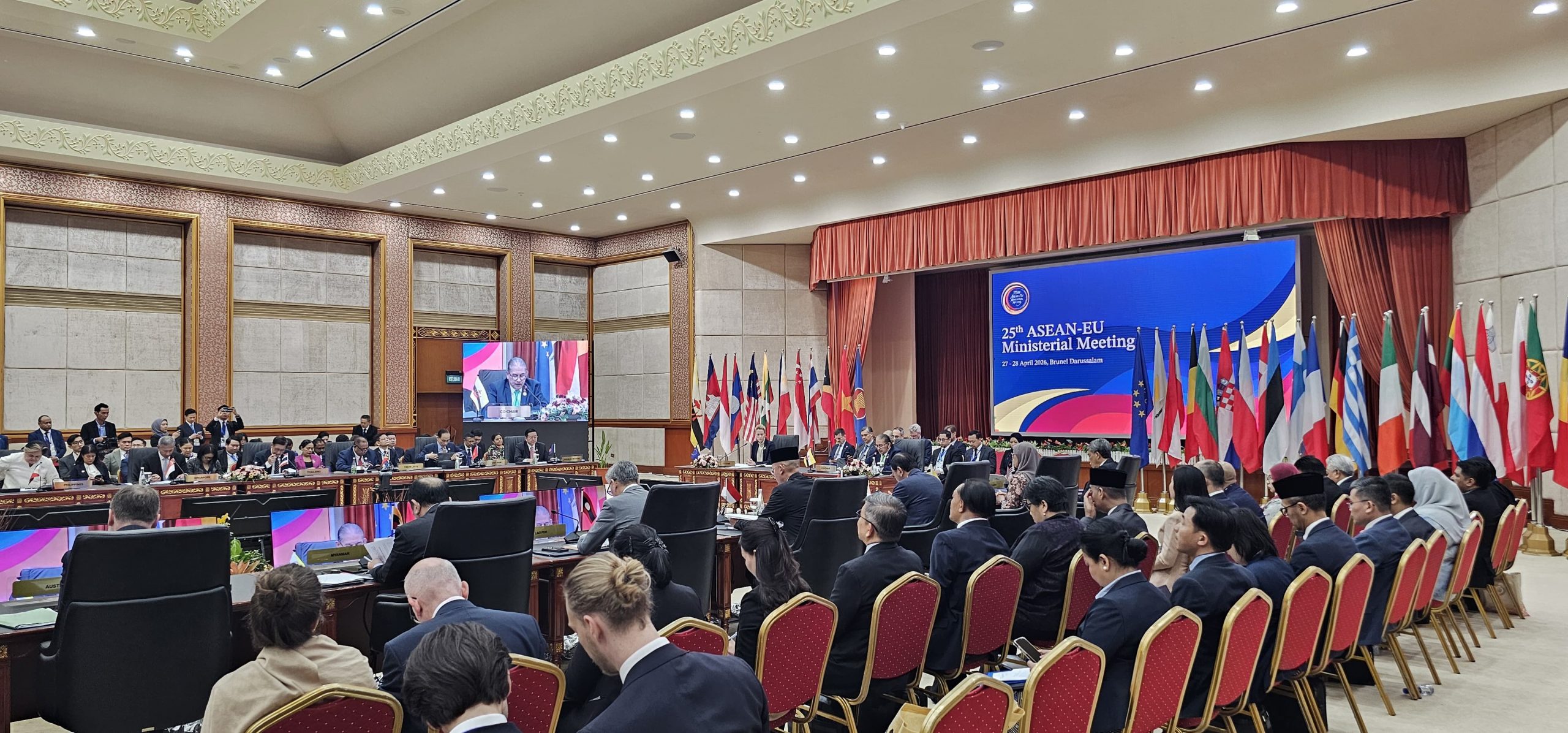
The European Union’s foreign policy chief co-chaired the 25th ASEAN–EU Ministerial Meeting in Brunei on April 27 to 28, directly advocating for the diversification of resources, particularly oil, away from Russian oil revenues that would otherwise be funding the Russo-Ukrainian war. About 50 days later, ASEAN members flew to Russia for the ASEAN-Russia Commemorative Summit, which celebrated 35 years of relations and successfully endorsed the Comprehensive Plan of Action to Implement ASEAN-Russian Federation Strategic Partnership (2026-2030), notably deepening energy cooperation.
Well before the outbreak of war between Russia and Ukraine, it was no secret that the EU and Russia were rivals at best, and active belligerents-by-proxy at worst, with one arming Ukraine and sanctioning the other. ASEAN itself is not internally agreed on Russia, with Singapore remaining to be the only member to have firmly sanctioned Moscow over the invasion. Despite this, Singapore’s Prime Minister attended the summit in Kazan anyway, welcoming Russia’s support for ASEAN centrality.
Instead of incurring diplomatic backlash, the communiqué from the most recent 59th ASEAN Foreign Ministers’ Meeting shows that plans to implement the ASEAN-Russia Strategic Partnership remain strong, alongside a Comprehensive Work Plan with the United States and anticipation of a joint statement with China on Middle East impacts and energy cooperation. Under certain conditions, ASEAN has been confident enough to shift its high-stakes, politically sensitive relationships away from potential flashpoints and into technical policy instruments, such as plans of action and work plans, through its ministerial processes.
Commemorative summitry proliferates due to how the risk is pooled at the bloc level before returns are privately collected at the domestic level. A celebratory occasion separate from the war ensures attendance under reasonable pretence, producing reasonable deliverables that can be easily supported by consensus and later pursued through bilateral channels. Consensus rulings have often been the subject of scrutiny when applied to security issues within the region, much like ASEAN’s struggle to end violence in Myanmar. However, it is also the very same consensus mechanism that inadvertently allowed ASEAN to deal with both sides of the Russia-West rivalry in 2026. The same arrangement may also point to a clearer role for ASEAN in the regional architecture, as a convenor of non-kinetic cooperation that is currently in high demand by major powers.
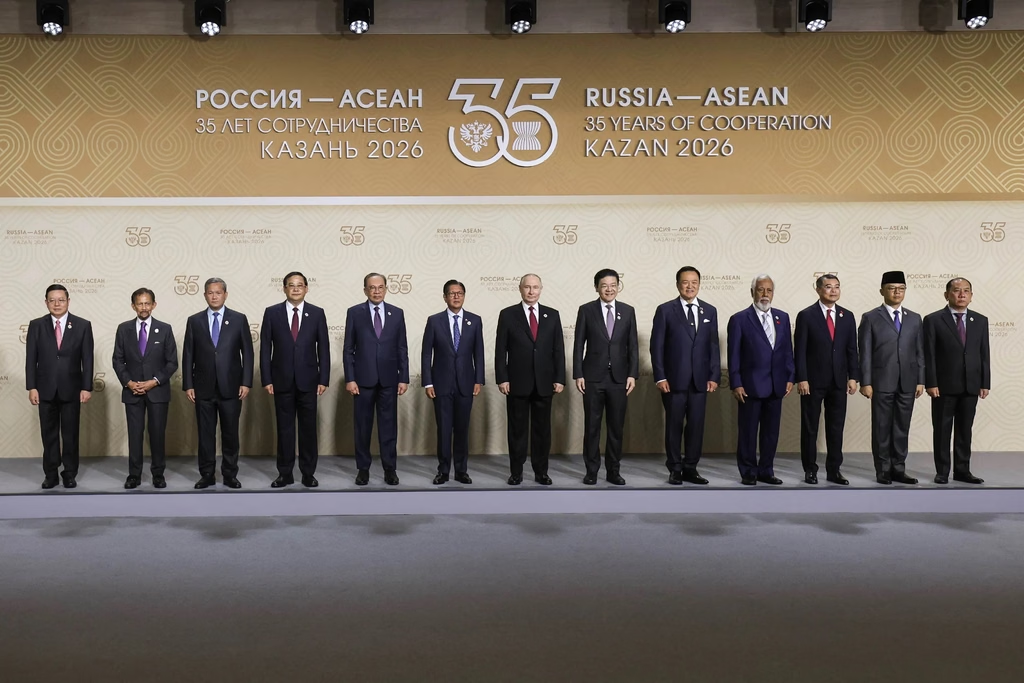
Image: MDDI Photos/Kendrick Wong, June 2026
By and large, nothing would enter an ASEAN document that any of the eleven divergent governments could not sign collectively; the 2026 iteration of the Kazan Declaration had to contain both a reaffirmed commitment to building a multipolar world order and reaffirmations of the UN Charter and international law.
The 2021 meeting with Min Aung Hlaing exposed the limits of what the bloc could enforce against one of its own members and structural flaws in its decision-making capabilities, while the Kazan Declaration of 2026 tested ASEAN’s handling of an external demand. This is indicative of how consensus tends to succeed when ASEAN must absorb an external demand because the case of a collective reaction failing would break the “safety net” of reassurance needed by its individual members.
A day before the Kazan Summit of 2026, the 52nd G7 summit, held in France, reaffirmed solidarity with Ukraine. The lack of international condemnation or criticism suggests that the West cannot afford to sanction a bloc it is simultaneously courting for a smooth partnership, especially during an ongoing and volatile global energy crisis. This speaks to the attendance as a bloc defeating attribution by ensuring that no one country could be ostracised or targeted for condemnation in the decision to attend Russia’s summit.
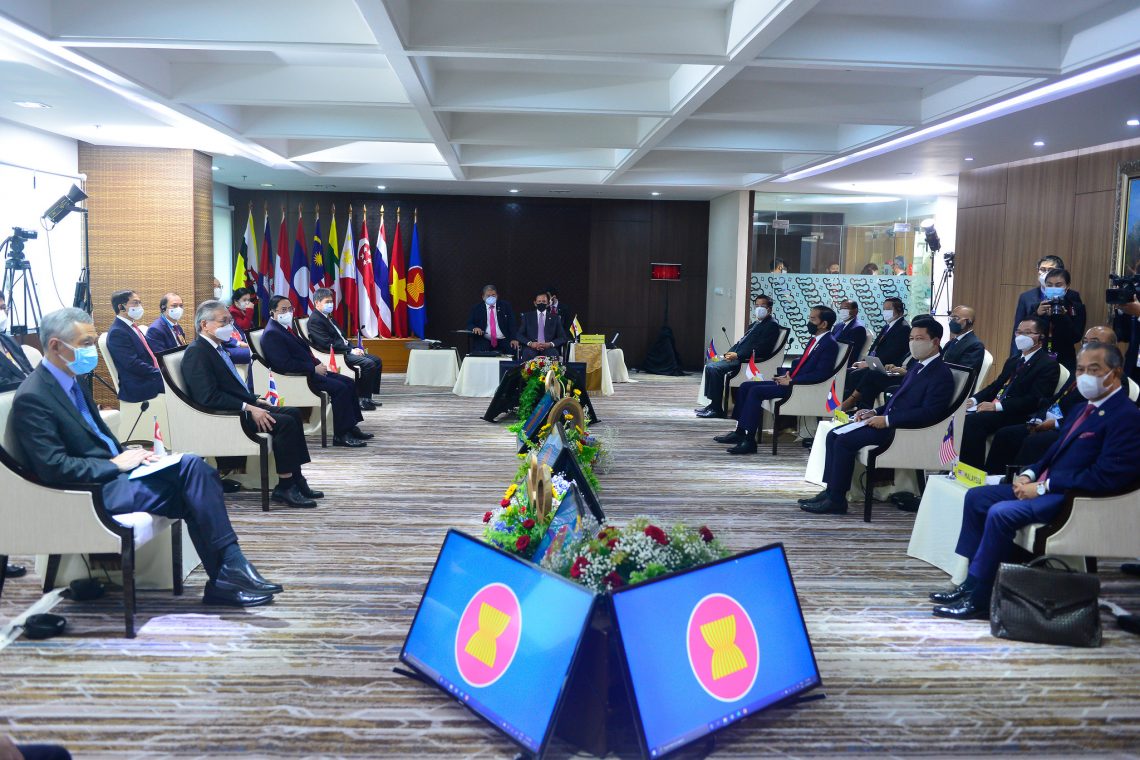
Image: Laily Rachev/Indonesian Presidential Palace, April 2021
Malaysia was assured supplies of petrol, oil and gas from Russia in July, notwithstanding its caveat that it would import only if this was “acceptable from an international trading basis”; Indonesia held commercial talks regarding the deployment of Russian floating nuclear power plants and modular reactor technologies to support energy resilience; and the Philippines set plans for mechanisms relating to regular Russian oil purchases and openness on nuclear and visa-free travel.
The crises of 2026 have led to option-exercising that has ASEAN states engaging in multipolarity with tangible results in non-kinetic domains of energy, technology, trade and recognition. While the era of secondary sanctions depends on great-power competition to compel third parties to choose, past a certain threshold of intensity, each power would need demonstrable standing in the contested region more than it needs the region’s fidelity.
Quite apart from ASEAN’s principle of non-interference, a démarche on the morality of the war is difficult to enforce when polarisation is what generates the demand for ASEAN’s cooperation. In many ways, the more intense the great-power competition, the weaker each power’s ability to impose alignment costs on a collectively organised third region.
Much of that presence is now sought on non-kinetic terms. Since the crisis involving the Strait of Hormuz, non-traditional security has slowly but surely taken the forefront as countries continue to work with ASEAN states to meet growing energy needs, and vice versa. The elevation of Türkiye to full Dialogue Partner status at the 59th AMM, while Germany and Qatar joined Denmark as new sectoral dialogue partners, expands the perimeter of defensive multilateralism by diluting the gravitational pull of any single great‑power bloc. Great powers have long since invested in agile minilaterals, from AUKUS to the Quad, serving as alternative routes to regional stability that do not directly engage with consensus-bound ASEAN multilateralism. Building a broader coalition of stakeholders around ASEAN’s multilateral core counterbalances an oversaturation of minilateralism by reinforcing its relevance within multi-vector partnerships.
As minilaterals built around shared threat perceptions take on more of the region’s hard security, ASEAN could settle into a leading convenor for the region’s non-kinetic layer at the crossroads of international diplomacy despite its limits in carrying the bloc through a kinetic crisis.
Author: Wira Gregory is a Brunei-based analyst covering Southeast Asian diplomatic, geopolitical, and security developments