Photo: Ambrey
This report analyzes the situation surrounding the Caroline Bezengi, an oil tanker currently grounded and leaking off the coast of Oman. The incident serves as a prominent case study on the liability risks associated with the global “shadow fleet”—a network of vessels operating with limited transparency to evade sanctions.
Executive Summary
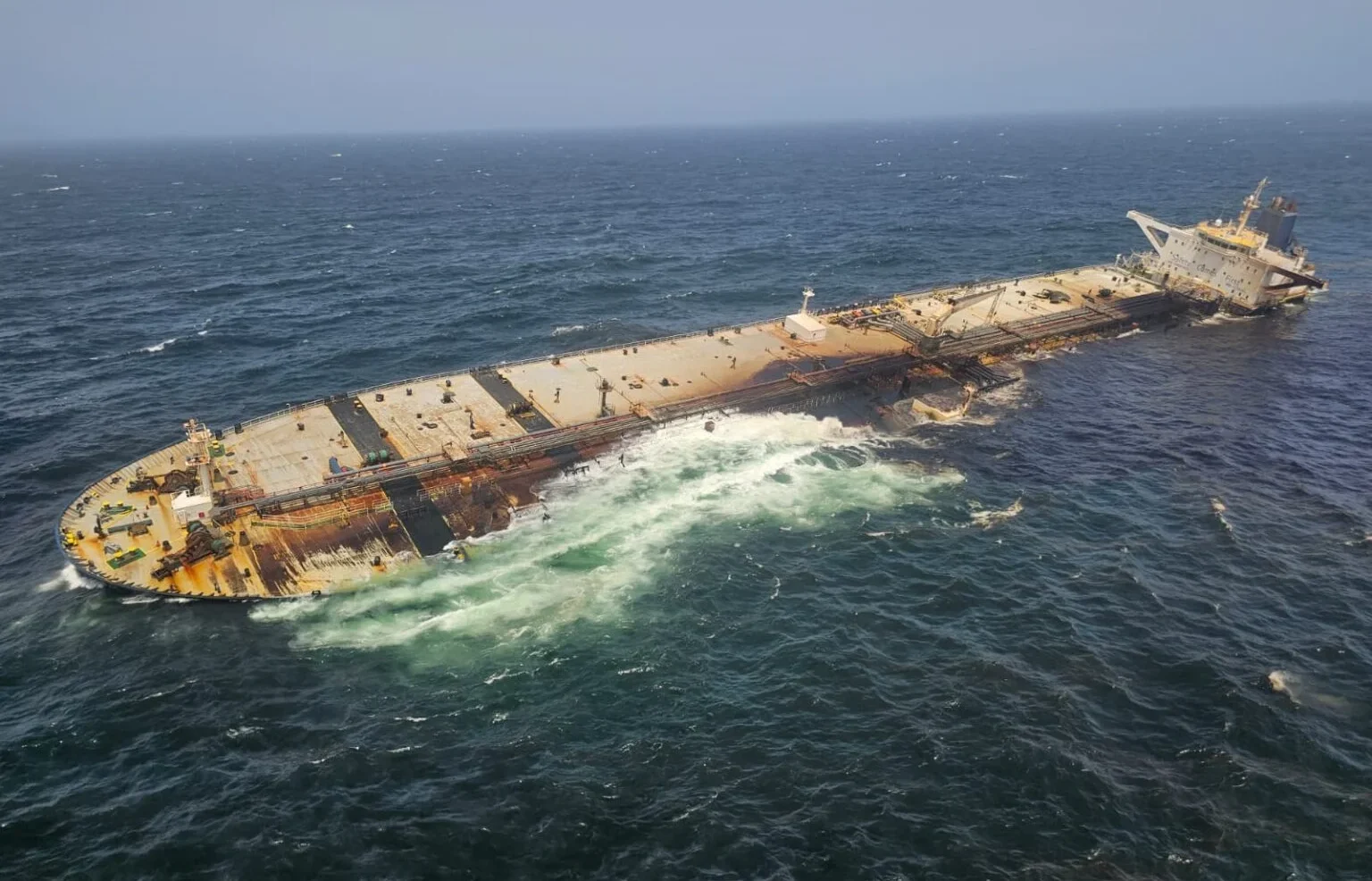
The Caroline Bezengi (IMO 9224439) is a 25-year-old Suezmax tanker carrying approximately 800,000 barrels of sanctioned Russian crude. After reporting a suspicious explosion near Yemen on June 8, 2026, the vessel was abandoned by its crew and eventually ran aground on June 30 near the Hallaniyat Archipelago, a sensitive marine reserve in Oman.
The incident has resulted in a significant oil spill that has reached the Omani mainland, creating a severe environmental crisis and a stalled recovery effort due to a “liability gap.”
Key Factors Contributing to the Liability Gap
- Opaque Ownership and Registration: The vessel’s ownership is difficult to trace, reportedly linked to a Shanghai-based entity that has not responded to Omani authorities. The ship, formerly flagged in Cameroon, is currently listed as having an “unknown” flag, effectively isolating it from standard regulatory oversight.
- Inadequate Insurance: The vessel is not covered by any recognized International Group (IG) Protection and Indemnity (P&I) club. It is reportedly linked to “Arsenal Kyrgystan,” an obscure, non-standard insurer, raising significant doubts about the availability of funds for salvage, cleanup, and environmental compensation.
- Sanctions and Legal Complexity: Because the tanker was transporting sanctioned Russian crude, standard international response mechanisms, such as the International Oil Pollution Compensation (IOPC) Funds, have reportedly refused to provide coverage. The incident is also being contested under complex “act of war” clauses, further paralyzing insurance and legal intervention.
- Environmental Impact: The spill threatens the Hallaniyat Islands Marine Buffer Zone, home to endangered humpback whales, sea turtles, and coral reefs. As of mid-August 2026, the spill has spread across a vast area (estimated between 400 and over 2,000 sq km), and the vessel is reportedly breaking up on the rocks, risking a much larger discharge of its remaining cargo.
Current Situation
- Salvage Standoff: Although salvage firms identified a lightering plan (transferring oil to a receiving vessel), operations are frozen due to the aforementioned legal and financial roadblocks. The lack of an identifiable, responsive owner prevents the authorization of necessary funding for critical salvage operations.
- Oman’s Burden: With international assistance hampered by the vessel’s shadow status, the responsibility for containment and mitigation has fallen heavily upon Omani authorities, who have deployed aircraft and specialized personnel to manage the disaster.
Conclusion
The Caroline Bezengi incident underscores the systemic risks inherent in the shadow fleet. By design, these vessels operate in a regulatory vacuum, stripping coastal states of their ability to hold owners accountable for environmental disasters.
The case is being highlighted by environmental advocates and maritime experts as evidence that existing international liability frameworks are insufficient to manage the hazards posed by opaque shipping networks in an era of intensified geopolitical sanctions.
Author: Mauritius-based Bruneau Laurette is Director of DRCS Africa HQ and an elite defence and security consultant with over 25 years of experience in high-risk environments, maritime anti-piracy and port security. He has advised the governments of Mauritius, Seychelles and Tanzania, established specialist tactical units and trained law enforcement and correctional officers.