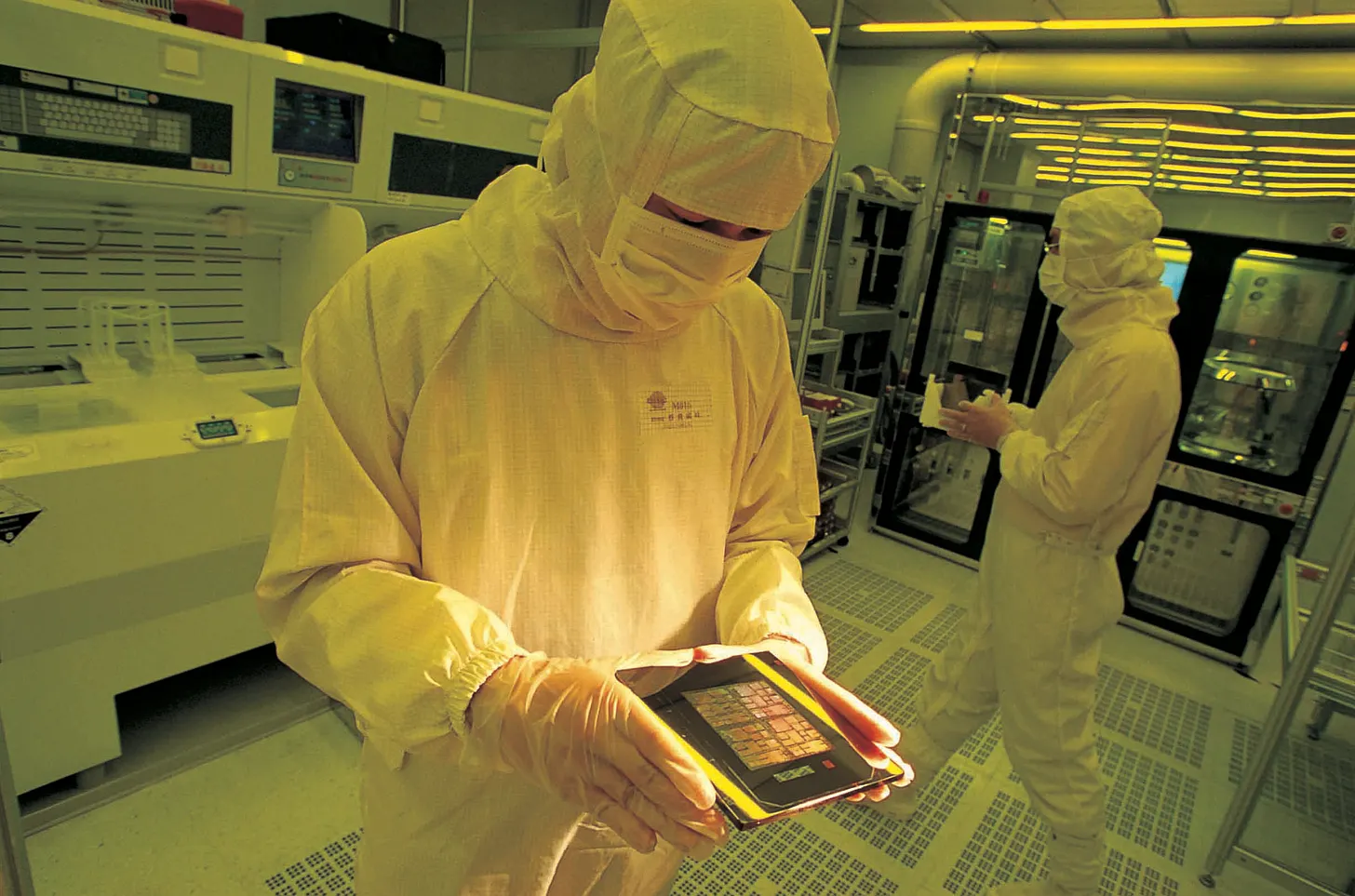
Image: Taiwan Semiconductor Manufacturing Co., Ltd
Abstract
The global digital economy is increasingly dependent on a relatively concentrated semiconductor manufacturing ecosystem. Advanced artificial intelligence, cloud computing, autonomous vehicles, telecommunications, defence systems and critical infrastructure all rely on increasingly sophisticated semiconductor technologies.
At the centre of this strategic dependency is Taiwan Semiconductor Manufacturing Company (TSMC), whose position in advanced semiconductor manufacturing has transformed the company into an actor of considerable geopolitical and economic significance.
This paper examines the security implications of global semiconductor concentration, focusing on the intersection of artificial intelligence, geopolitical competition, economic interdependence and critical infrastructure resilience. It argues that semiconductor supply-chain disruption should be treated not merely as an industrial or commercial concern, but as a strategic national and international security risk.
The paper further proposes a multidimensional risk-management framework based on supply-chain diversification, strategic intelligence, international cooperation, technological resilience and the protection of critical digital infrastructure. It concludes by highlighting the implications for small island developing states, including Mauritius, which must prepare for technological disruptions despite their limited role in global semiconductor production.
Keywords: Semiconductor Security; TSMC; Artificial Intelligence; Geopolitical Risk; Critical Infrastructure; Economic Security; Taiwan; National Security; Small Island Developing States.
Introduction: When Technology Becomes a Security Dependency
The twenty-first century is witnessing a fundamental transformation in the relationship between technology, economic power and national security. Artificial intelligence is no longer simply a technological innovation. It is becoming a strategic capability influencing military planning, intelligence gathering, financial systems, industrial production, cybersecurity, communications and public administration. However, the digital economy depends on a physical foundation that often receives less public attention: semiconductors.
The image of major technology corporations such as Apple, Microsoft, Tesla, Amazon, Alphabet, Meta and NVIDIA connected to Taiwan Semiconductor Manufacturing Company illustrates an important strategic question: how resilient is the global technological system when so many industries depend on a highly specialised and concentrated semiconductor ecosystem? The illustration should not be interpreted as proof that all seven companies have identical direct supply relationships with TSMC. Rather, it highlights the wider interdependence between technology developers, chip designers, manufacturers and the digital economy. This dependency creates a new dimension of geopolitical vulnerability.
TSMC and the Strategic Concentration of Semiconductor Manufacturing
Semiconductors are essential components of modern economic and security infrastructure. They are used in smartphones, aircraft, vehicles, telecommunications equipment, medical devices, industrial automation, data centres and advanced military technologies. The concentration of advanced manufacturing creates a structural vulnerability. According to the OECD’s 2025 report Economic Security in a Changing World, more than 90% of leading-edge logic chips are produced by TSMC in Taiwan. The OECD also identifies geographical concentration, technological specialisation and limited substitutability as major vulnerabilities within the semiconductor value chain. This concentration means that a major disruption affecting advanced semiconductor production could have consequences far beyond Taiwan.
Potential consequences include:
- Disruption of global electronics manufacturing.
- Delays in artificial intelligence infrastructure development.
- Increased costs for technological products and services.
- Reduced availability of critical industrial components.
- Disruption to telecommunications and data-centre expansion.
- Increased pressure on defence and national security procurement.
The strategic importance of TSMC therefore extends beyond its commercial value. Its manufacturing capacity represents an important component of global technological stability.
The Taiwan Strait: A Geopolitical Risk with Global Consequences
The geographical concentration of advanced semiconductor manufacturing in Taiwan creates a significant geopolitical risk. The Taiwan Strait is situated within an area of strategic competition involving major international powers. Any escalation of tensions, military confrontation, blockade, disruption of maritime transport or restrictions on critical trade flows could create serious consequences for semiconductor production and distribution. It is important to distinguish between different scenarios:
- Scenario A: Military escalation – An armed confrontation could damage infrastructure, interrupt production, disrupt energy supplies and restrict the movement of essential materials.
- Scenario B: Maritime disruption – A blockade, shipping restrictions or heightened military tensions could interrupt the movement of semiconductor inputs and finished products.
- Scenario C: Economic and technological confrontation – Export controls, sanctions, trade restrictions and technological competition could further fragment global supply chains.
- Scenario D: Infrastructure and cyber disruption – Cyberattacks against manufacturing facilities, logistics networks, energy systems or supporting digital infrastructure could affect production and distribution.
These scenarios are not predictions of an inevitable conflict. They are risk scenarios that governments, businesses and security institutions should incorporate into strategic planning.
Artificial Intelligence and the New Security Architecture
The development of artificial intelligence is increasing the strategic importance of advanced computing infrastructure. Companies such as NVIDIA play a significant role in supplying specialised processors and computing technologies used in AI development. However, chip design and chip manufacturing are different activities. NVIDIA designs important AI processors, while TSMC is among the principal manufacturers of advanced chips used by the global technology industry. This distinction reveals the interconnected nature of the semiconductor ecosystem. A disruption at one stage can affect multiple downstream activities.
The consequences extend to:
- Military artificial intelligence applications.
- Intelligence analysis and data processing.
- Autonomous systems and robotics.
- Financial and digital payment infrastructure.
- Cloud computing and public-sector digital services.
- Cybersecurity technologies.
- Critical communications networks.
Consequently, semiconductor security should be integrated into national AI strategies and wider critical infrastructure protection policies.
Semiconductor Supply Chains as a National Security Issue
Traditional national security policies have concentrated on territorial integrity, military preparedness, intelligence and the protection of strategic infrastructure. However, the increasing technological interdependence of states requires a broader approach. Economic security and technological resilience must become integral elements of national security planning. A country may possess sophisticated digital infrastructure while remaining dependent on foreign suppliers for the hardware required to maintain it. This creates a potential strategic vulnerability.
Governments should therefore assess:
- Their dependence on imported semiconductor-based equipment.
- The resilience of telecommunications and data-centre infrastructure.
- The availability of alternative suppliers.
- The security of essential digital services.
- The consequences of prolonged technology shortages.
- The exposure of defence and emergency services to supply-chain disruptions.
The OECD’s 2025 semiconductor value-chain research reinforces the need for better monitoring, diversification and international cooperation.
Implications for Small Island Developing States: The Case of Mauritius and Rodrigues
Small Island Developing States are not major semiconductor manufacturing centres. Nevertheless, they are increasingly dependent on the digital infrastructure and technological products supported by global semiconductor supply chains. Mauritius and Rodrigues illustrate this vulnerability. The country’s financial services, telecommunications, public administration, tourism, maritime activities, healthcare and emergency management increasingly depend on digital systems and imported technology.
A prolonged semiconductor shortage could affect:
- Telecommunications infrastructure maintenance.
- Replacement of essential electronic equipment.
- Digital banking and financial services.
- Public-sector information systems.
- Maritime monitoring and communications.
- Healthcare equipment and diagnostic technologies.
- Disaster management and emergency response capabilities.
For Rodrigues, geographical isolation and dependence on external supply chains make resilience planning particularly important. The strategic lesson is that small island territories should not wait for a major international crisis before assessing their technological dependencies. A practical response should include national digital infrastructure risk assessments, diversified procurement, equipment maintenance planning, cybersecurity preparedness and regional cooperation.
An Integrated Framework for Semiconductor and Technology Security
From an international security and risk-management perspective, I propose a six-pillar framework.
- Pillar 1: Strategic intelligence and early warning – Governments should monitor geopolitical developments, supply-chain disruptions, export controls and emerging technological dependencies.
- Pillar 2: Supply-chain diversification – States and businesses should avoid excessive dependence on a single manufacturing location or supplier wherever viable alternatives exist.
- Pillar 3: Critical infrastructure protection – Telecommunications, energy systems, data centres, banking infrastructure and emergency services should have contingency arrangements for prolonged technology disruptions.
- Pillar 4: Cybersecurity and technological integrity – Protection should extend beyond physical manufacturing facilities to software, intellectual property, industrial control systems and logistics networks.
- Pillar 5: International cooperation – Semiconductor resilience requires cooperation between manufacturing economies, technology companies, governments and international institutions.
- Pillar 6: Small-state resilience and capacity development – Small Island Developing States should develop technological risk registers, regional procurement cooperation, digital continuity plans and specialised risk-management capabilities.
Strategic Recommendations
I propose the following policy priorities:
- Recognise semiconductor dependencies as a component of national and economic security assessments.
- Establish periodic assessments of critical technology supply chains.
- Develop contingency plans for prolonged disruption of essential electronic equipment.
- Strengthen cooperation between cybersecurity, intelligence, economic and infrastructure protection institutions.
- Encourage transparent public-private information-sharing arrangements.
- Promote regional cooperation to improve procurement resilience among small island economies.
- Integrate technological supply-chain risks into national disaster preparedness and business continuity planning.
- Conclusion: The Future of Security Is Also Technological
The global semiconductor ecosystem demonstrates that national security is increasingly influenced by dependencies that extend beyond national borders. A disruption in a highly specialised manufacturing centre can potentially affect industries, governments and societies across the world. The growing importance of artificial intelligence further increases the strategic significance of advanced semiconductor technologies.
For this reason, the international community must reconsider the relationship between technological innovation and security resilience. The question is no longer simply who designs the most advanced technology, but who controls the infrastructure, resources, manufacturing capacity and supply chains that make that technology possible.
For small island developing states, the lesson is equally important: strategic resilience does not require producing every critical technology domestically. It requires understanding dependencies, anticipating disruptions, developing alternatives and strengthening international cooperation. In the emerging geopolitical order, technological dependency is a security variable, semiconductor resilience is a strategic necessity, and digital sovereignty must be understood as an essential dimension of national resilience.
References
- OECD (2025). Economic Security in a Changing World. OECD Publishing.
- OECD (2025). Mapping the Semiconductor Value Chain: Working Towards Identifying Dependencies and Vulnerabilities. OECD Science, Technology and Industry Policy Papers, No. 182.
- OECD (2025). The Chip Landscape: Geographical Distribution of Wafer Fabrication Capacity. OECD Science, Technology and Industry Policy Papers, No. 188.
- Taiwan Semiconductor Manufacturing Company (TSMC). Annual Report 2025.
- Taiwan Semiconductor Manufacturing Company (TSMC). Risk Management.
- United Nations (2024). Pact for the Future, including the Global Digital Compact.
- World Economic Forum (2025). Global Risks Report 2025.
Author: Joseph Grajille Felicité is a Mauritius-based environmental advocate and security professional with over 30 years of experience in law enforcement and criminal intelligence. As Founder and CEO of Rodrigues Environment Friendly Group (REFG-NGO), he promotes climate resilience, biodiversity conservation, sustainable development and community empowerment, particularly in small island developing states such as Rodrigues.